

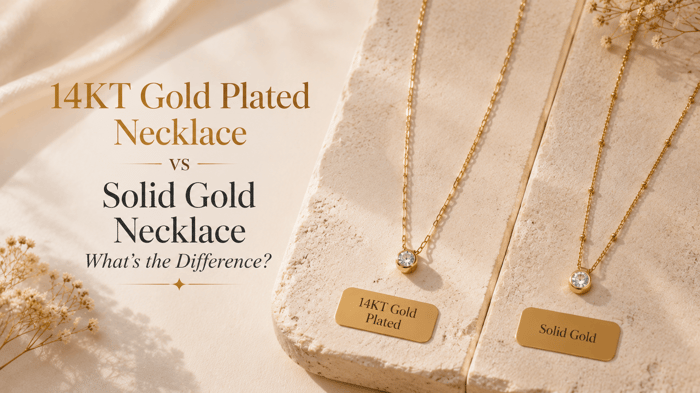
If you have ever stood in front of a jewelry display or scrolled through a brand's website, wondering whether to go gold plated or solid gold, you are not alone. Both look beautiful. Both come in the same warm yellow tone.
Both can carry the same designs and the same stones. But they are fundamentally different products, and understanding that difference helps you make the right call for your budget, your lifestyle, and what you actually want from a piece of jewelry.
This is a straight, honest comparison of the two. No upselling, no oversimplification. Just the information you need.
What Is a 14KT Gold Plated Necklace?
A gold plated necklace starts with a base metal, typically brass, copper, or sterling silver, and gets coated with a thin layer of real gold using an electroplating process.
The "14KT" refers to the purity of the gold used in that outer layer, not the entire piece. So the gold you see and feel is genuinely 14 karat gold. It is just applied as a surface finish rather than running through the entire piece.
The thickness of that gold layer is measured in microns. A higher micron count means a thicker plating that lasts longer before showing wear.
Most fashion jewelry uses a very thin plating of around 0.5 microns. Quality brands like Adina Eden use significantly thicker plating that holds up to regular wear in a way that cheaper fashion jewelry simply cannot.
What defines a quality gold plated necklace:
Plating thickness of at least 2 to 3 microns for meaningful durability.
A quality base metal like sterling silver or brass, rather than cheaper alloys.
Even, consistent plating with no thin spots at high-wear points like clasps and links.
A finish that matches solid gold visually without visible differences in tone or texture.
What Is a Solid Gold Necklace?
Solid gold means the entire piece is made from a gold alloy throughout, not just on the surface. Pure gold is 24 karats, but it is too soft for jewelry in its pure form. So it gets alloyed with other metals like silver, copper, and zinc to create a harder, more durable material.
14KT solid gold means 14 parts gold out of 24, or about 58.3 percent pure gold. The remaining 41.7 percent is the alloy metals that give it strength and durability. 18KT solid gold is 75 percent pure gold, which gives it a richer color but slightly less durability than 14KT.
What solid gold delivers that plated gold cannot:
Consistent gold content throughout the entire piece rather than just at the surface.
No plating layer that can wear through over time with regular use.
Intrinsic metal value that makes it a financial asset as well as a jewelry piece.
Hypoallergenic properties at higher karat levels since the gold content is higher.
The Visual Difference: Can You Actually Tell?
This is where most people are surprised. A well-made 14KT gold plated necklace and a solid gold necklace of the same design look virtually identical to the naked eye. The color, the finish, and the way each catches light are indistinguishable in most conditions.
The Adina Eden Pave X Baguette Roller Charm Necklace is a strong example of how good quality gold plating looks in practice.
The pavé-set stones and baguette accents along the roller charm create a piece with genuine visual sophistication, and the gold plating delivers the warm, polished finish that makes those design elements read as elevated.
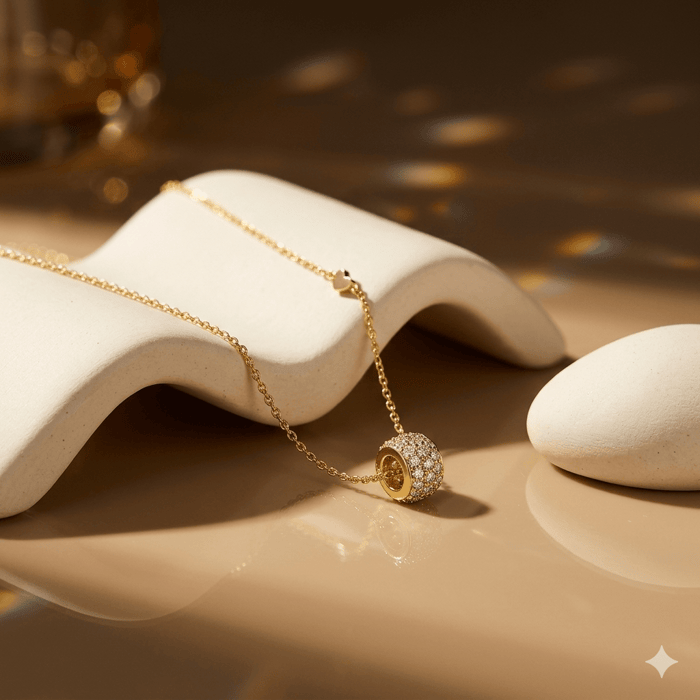
Without knowing the construction details, most people looking at this necklace would assume it is fine jewelry. That is exactly what quality plating achieves.
The visual difference, where it does appear, tends to show up in two situations:
Over time, the plating on a lower-quality piece wears through at high-contact points like the clasp and the links closest to the clasp.
Under very close inspection, where slight color inconsistencies in thin or uneven plating become visible.
Neither of these is an issue with a quality gold plated necklace maintained with proper care. The difference is in longevity, not immediate appearance.
The Price Difference: What You Actually Pay?
This is the most significant practical difference between the two options. Solid gold necklaces cost substantially more than gold plated ones, and the gap widens significantly with more complex designs and heavier chains.
Why does solid gold cost more?
The gold content throughout the entire piece has real commodity value that fluctuates with gold market prices.
Manufacturing solid gold jewelry requires more material and more precise craftsmanship.
The intrinsic value of the metal itself is built into every piece, regardless of design.
Higher karat pieces, like 18KT, cost more than 14KT because the gold content is higher
For many buyers, especially those building an everyday jewelry wardrobe or trying out a new style before committing to a fine jewelry investment, the price difference makes gold plated the smarter starting point.
A beautifully designed gold plated necklace at a fraction of the solid gold price lets you wear great jewelry now without the financial commitment of fine jewelry.
The Adina Eden Dainty Stone Accent Necklace illustrates this point well. The delicate stone accents along a fine chain create a piece with a genuinely refined aesthetic that works for everyday wear across a wide range of outfits and occasions.
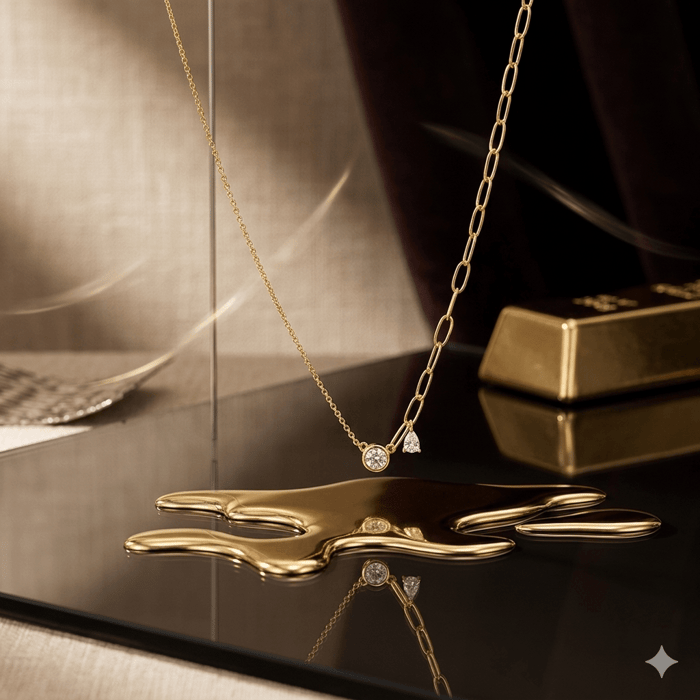
In a gold plated format, this kind of piece is accessible as a daily wear item. In solid gold, the same design costs significantly more, which changes how you think about wearing it every day.
Durability and Longevity: The Honest Comparison
This is where solid gold has a genuine advantage that cannot be argued away. Because the gold content runs throughout the entire piece, solid gold does not wear through.
It can be scratched, it can develop a patina, and it can get dented with rough handling, but the gold itself does not disappear the way a plating layer eventually can.
A gold plated necklace will wear through eventually at the highest-contact points. How quickly depends on:
The thickness of the plating applied during manufacturing.
How frequently the piece is worn and for how long each time.
Exposure to sweat, water, perfume, and skin care products.
How the piece is stored when not being worn.
A quality gold plated necklace with thick plating, worn with reasonable care and stored properly, can last several years before showing significant wear. A thin-plated fashion piece worn daily with no care might show wear in months.
If you want a necklace to last indefinitely with minimal care, solid gold is the right choice. If you want beautiful jewelry at an accessible price point and are willing to follow basic care practices, quality gold plating delivers excellent longevity for the investment.
When Gold Plated Is the Right Choice?
Gold plated is the right choice when:
You want to try a new style or trend before committing to a solid gold investment.
You are building an everyday jewelry wardrobe and need multiple pieces rather than one.
The design you love is available in gold plated at a price that makes daily wear feel comfortable.
You are buying a gift and want the look of fine jewelry at an accessible price point.
You are willing to follow basic care practices to extend the life of the plating.
The Adina Eden CZ Multi Color Fish Pendant Necklace is a great example of a design where the gold plated format makes complete sense.
The playful fish pendant with multicolor CZ stones is a personality piece, a necklace you reach for because it makes you happy and adds character to an outfit.
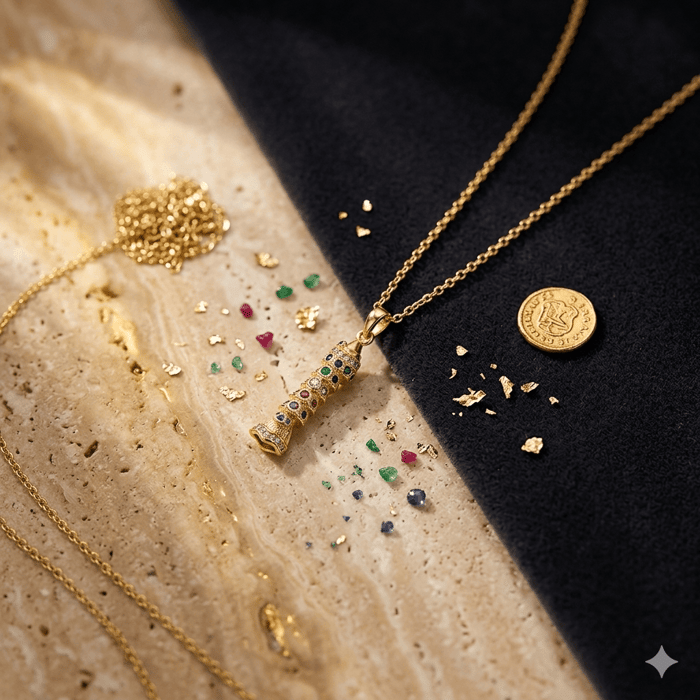
Wearing a piece like this daily is exactly what it is designed for, and the gold plating delivers the warm finish and quality feel that makes it enjoyable to wear without the price of solid gold.
When Solid Gold Is the Right Choice?
Solid gold makes sense when:
You want a piece that will last indefinitely without maintenance concerns.
You are buying something intended to be an heirloom or a long-term investment.
You have a metal sensitivity that makes the base metal in plated jewelry a concern.
The design is simple and timeless enough to justify the fine jewelry price point.
You want the resale and intrinsic value that solid gold carries as a commodity.
Adina Eden offers solid 14KT gold pieces across its lineup for exactly these moments. When the occasion or the intention calls for fine jewelry, the option is there with the same design quality that runs through its gold plated range.
The Bottom Line
The choice between a 14KT gold plated necklace and a solid gold necklace comes down to four factors:
Budget: Gold plated delivers the look of fine jewelry at a fraction of the cost.
Longevity: Solid gold lasts indefinitely without wear-through concerns.
Skin sensitivity: Solid gold is safer for reactive skin at higher karat levels.
Intention: Everyday fashion jewelry favors plated, heirloom, and investment pieces, favor solid gold.
Neither is the wrong answer. They serve different purposes and different moments in a jewelry wardrobe. Start with quality gold plated pieces from a brand you trust, wear them well, and invest in solid gold when the piece and the moment genuinely call for it.