

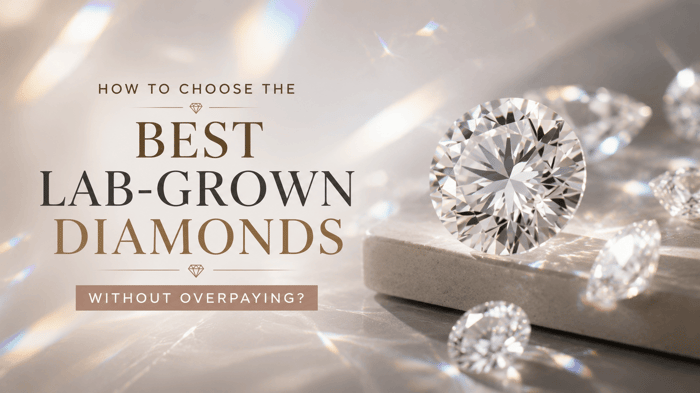
The fastest way to overpay for a lab-grown diamond is to shop by carat size alone and ignore everything else on the spec sheet. Lab-grown diamonds already cost significantly less than natural diamonds of the same size and quality. If you are still paying a steep price for one, something else is driving that cost up, and it is usually not the diamond itself.
This guide breaks down exactly where the hidden costs hide, what details actually justify a higher price, and how to compare pieces side by side so you walk away with real value instead of a markup dressed up as quality.
We will use real product examples throughout so you can see these principles in action rather than just in theory.
What Drives Lab-Grown Diamond Pricing?
Lab-grown diamond pricing is based on the same four factors as natural diamonds: carat weight, cut, color, and clarity. The difference is in how these factors get bundled together, and that bundling is where overpaying often happens.
Here is what to check on every listing before comparing prices:
- Carat weight of the stone or stones
- Color grade, ideally D through H, for a clean white appearance
- Clarity grade, ideally VS2 or higher, for inclusions invisible to the naked eye
- Cut style and how it affects light reflection
- Metal type, since solid gold costs more than plated or filled metal
A retailer that lists all five of these clearly is giving you what you need to judge fair pricing. A retailer that only shows carat weight and a price tag is hiding information that affects value.
Carat Weight Alone Does Not Justify a Higher Price
Many shoppers assume a higher carat number always means a better deal or a more impressive piece. This is not true once you understand how carat weight interacts with cut style.
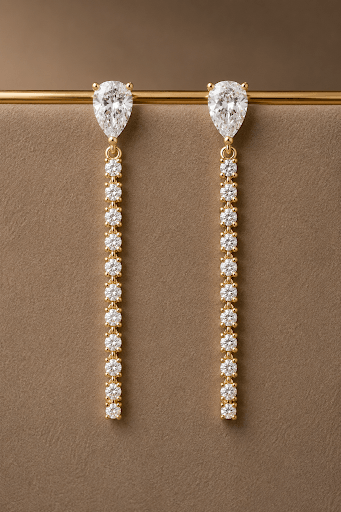
The Adina Eden Lab Grown Diamond Double Pear Tennis Stud Earring 14K illustrates this well. This earring carries a striking 2.8 carat total weight using a pear cut design, set in solid 14K gold with a secure post back closure. Its specs include:
- E color grade, just one step below the colorless top of the scale
- VS1 clarity grade, meaning inclusions are invisible without magnification
- Pear-cut diamonds set as a tennis-style stud
The pear cut elongates the visual size of the stone, so the carat weight reads even larger than the number suggests. This is the kind of detail that makes a high carat count actually worth the price, rather than just a big number used to justify markup.
Compare this to retailers who sell similarly sized stones in lower color grades like H or I without disclosing it clearly. A heavier stone with a weaker color grade can look duller and less white, even though it costs more on paper. Carat weight without context is a trap, not a value signal.
Watch for Retailers That Hide the Metal Type
One of the most common ways jewelry brands inflate prices on lab-grown pieces is by using thin gold plating or gold-filled metal while marketing the piece as though it were solid gold.
The diamond might be perfectly fine, but the setting will not hold up, and you are paying gold prices for a fraction of the actual gold content.
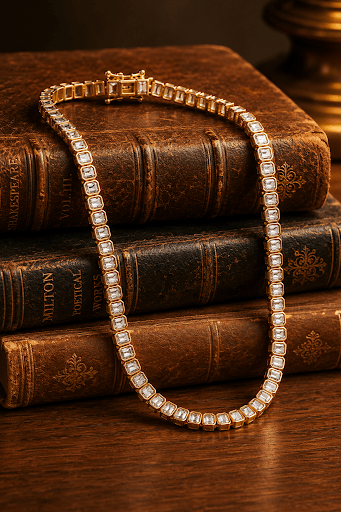
The Adina Eden Lab Grown Diamond Emerald Tennis Bracelet 14K avoids this issue entirely. Its specs include:
- Solid 14K gold construction throughout
- 4.76 total carat weight using emerald cut diamonds
- G color grade and VS1 clarity grade
- Safety clasp closure for secure everyday wear
- 7 inch bracelet length
Because the metal is solid gold rather than plated, this bracelet will hold its color and structure over years of wear, not just the first few months. When comparing tennis bracelets across brands, always confirm whether the listing says solid gold, gold-filled, or gold-plated. That single word changes the math on whether the price is fair.
Other retailers, including Brilliant Earth and James Allen, are generally transparent about metal type on their lab-grown tennis bracelets. The issue tends to show up more with fast-fashion jewelry sellers and some Etsy shops, where plating thickness and gold percentage are vague or missing entirely.
Multi-Stone Pieces Need Extra Scrutiny on Cut Consistency
Pieces with more than one diamond shape or cut style, like toi et moi designs, require a closer look because pricing can vary a lot depending on whether the stones are cut to match in size and brilliance or just loosely paired together.
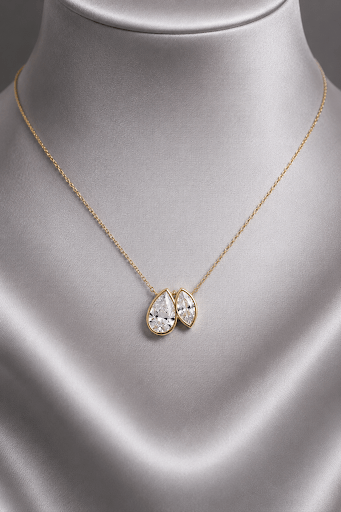
The Adina Eden Lab Grown Diamond Toi E Moi Bezel Necklace 14K is a useful example of getting this right. Its specs include:
- 1.47 total carat weight combining pear and marquise cut diamonds
- E color grade, near the top of the colorless range
- VS1 clarity grade
- Bezel-set diamonds in solid 14K gold
- 16 inch chain with a 2 inch extender
The two diamond shapes are matched in color and clarity grade, which keeps the overall look balanced rather than having one stone outshine the other. This is something to specifically ask about or look for when buying any multi-stone piece. If a retailer cannot tell you the color and clarity grade for each stone individually, you are likely paying for a piece where the stones were paired by availability rather than by design intention.
Practical Steps to Avoid Overpaying
Before checking out on any lab-grown diamond purchase, run through this short list:
- Confirm the color grade is listed, ideally D through H
- Confirm the clarity grade is listed, ideally VS2 or better
- Confirm the metal type, and look specifically for the words solid gold rather than plated or filled
- Compare the price per carat against at least two other retailers carrying similar grades
- For multi-stone pieces, ask whether each stone has its own grading or if grades are averaged
Retailers that answer all of these questions clearly, the way the three Adina Eden pieces above do, are generally pricing based on actual stone and metal quality. Retailers that dodge these questions or bury the specs in fine print are often pricing based on brand markup instead.
A Quick Word on Comparing Across Retailers
Brands like Blue Nile and Clean Origin are solid options for checking comparative pricing on loose lab-grown diamonds, since they let you filter by every grading category individually.
This makes them useful research tools even if you end up buying a finished piece elsewhere. Mejuri and Kendra Scott also carry lab-grown pieces, though their disclosure of grading details varies more by product line than it does at Adina Eden, where carat, color, clarity, and metal type are consistently listed across the lab-grown collection.
Use these comparison sites to build a baseline sense of fair pricing per carat at a given color and clarity grade. Then apply that baseline when shopping for finished jewelry, so you know whether the price you are seeing reflects the stone or reflects the brand name on the box.
The Bottom Line
Overpaying for a lab-grown diamond rarely comes down to the diamond itself, since lab-grown stones are already priced well below natural ones. It comes down to missing information: an unclear metal type, an undisclosed color or clarity grade, or a multi-stone piece where the pairing was never explained.
Ask for the four core details every time: carat, cut, color, and clarity, plus the metal type. When a retailer gives you all five without hesitation, you can trust that the price reflects real value. When they do not, treat that gap as a reason to keep shopping.