

ayering a 14KT gold plated necklace is one of the easiest ways to elevate an everyday outfit. When it is done well, a layered necklace stack looks intentional, personal, and genuinely stylish. When it is done wrong, it looks like you grabbed everything off the jewelry stand on your way out the door.
The difference between the two is not expensive jewelry or a natural eye for style. It is a handful of simple principles that anyone can learn and apply. This guide walks you through all of them so your next necklace stack looks like it was put together by someone who actually knows what they are doing.
Start With the Right Foundation: One Strong Base Piece
Every great necklace stack starts with a single anchor piece. This is the necklace that sets the tone for everything else you add. It does not have to be the most expensive piece or the most dramatic one. It just has to be the one you build around.
A good base piece tends to share a few qualities:
It sits at a length that works as a standalone necklace on its own.
It has enough visual presence to anchor the stack without dominating it.
Its style is flexible enough to work with multiple companion pieces.
It reflects your personal style clearly, so the stack feels like you.
The Adina Eden Paperclip Clicker Toggle Link Necklace is a strong base piece for exactly these reasons.
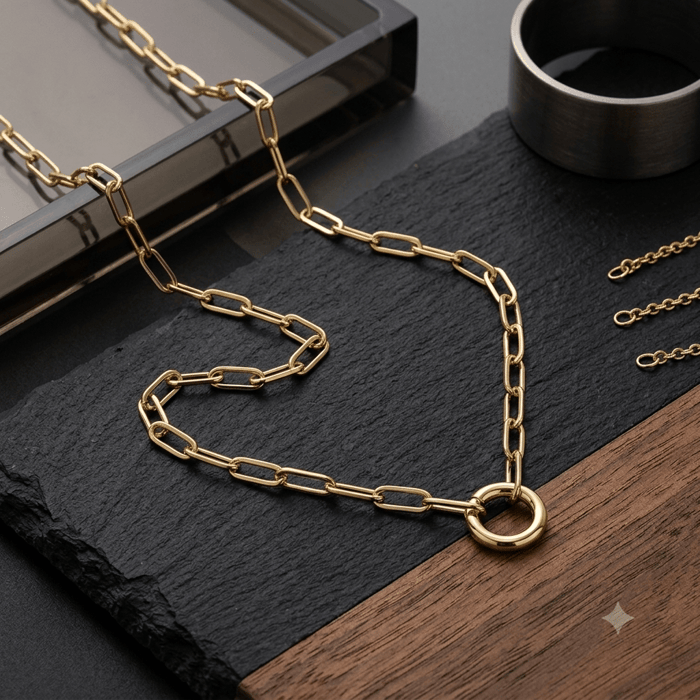
The flat rectangular paperclip links lie smoothly against the collarbone without shifting or tangling, and the modern link format works with virtually every style of companion necklace you might add above or below it.
The toggle closure adds a design detail at the back of the neck that makes the piece feel finished even when worn alone. Start here and build upward and downward in length.
Understand the Length Rule Before You Add Anything
The single most important technical rule in necklace layering is length graduation. Each necklace in your stack needs to sit at a visibly different length from the ones around it. When two necklaces are too close in length, they compete, tangle, and create a cluttered look that defeats the purpose of layering entirely.
A practical length guide for a three-piece stack:
Shortest layer (14 to 16 inches): Sits at or just above the collarbone, works as a choker-style base.
Middle layer (18 to 20 inches): Falls at the collarbone to just below, where most pendant necklaces naturally sit.
Longest layer (22 to 24 inches or more): Falls onto the chest and creates the visual drop that completes the stack.
Leaving at least two inches of visible separation between each necklace keeps the stack readable and clean. If two pieces keep gravitating toward each other throughout the day, that is a signal that their lengths are too similar and one needs to be swapped for a shorter or longer option.
Mix Chain Styles Intentionally, Not Randomly
Not every chain style works next to every other chain style. The goal is contrast and variety, but within a framework that feels cohesive. The easiest way to achieve this is to vary one element at a time: chain width, link shape, or surface texture, while keeping the metal tone consistent.
Combinations that work well together:
A flat paperclip chain next to a round cable chain next to a delicate box chain.
A plain smooth chain next to a pavé-set or stone-set chain for texture contrast.
A structured, solid chain next to a more delicate, flexible link for weight contrast.
A wide link chain at the base with progressively thinner chains layered above it.
Combinations to avoid:
Two chunky or bold chains at similar lengths competing for the same visual space.
Mixing metal tones within a single stack unless you are doing it very deliberately with a clear intention.
Pairing two pendant necklaces at similar lengths where the pendants bump into each other.
Stacking more than four necklaces, as the look typically becomes unreadable past that point.
Add a Color or Stone Element at the Right Layer
A plain gold necklace stack is clean and versatile, but adding one piece with stones or color gives the stack a focal point and prevents it from reading as too uniform.
The key is placement. Your stone or color piece should sit at the length where you want the eye to land, which is usually the middle or lower layer of the stack.
The Adina Eden Colored CZ Multishape Tennis Style Necklace is a strong choice for this role.
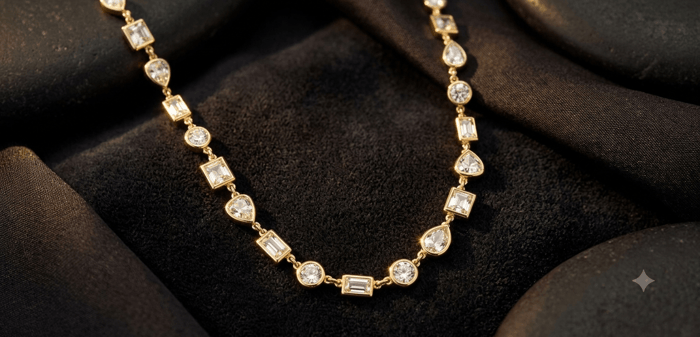
The multishape CZ stones in varying cuts create a more dynamic, interesting light return than a standard single-shape tennis necklace. Set this piece at your middle or lower layer length and build simpler, plainer chains around it so the color and sparkle have room to be seen.
Why a colored stone necklace works so well in a layered stack:
It creates a natural focal point that gives the eye somewhere to land.
The color adds warmth and dimension that plain gold chains cannot provide.
Multishape stone settings catch light differently at different angles, keeping the stack visually active.
It bridges the gap between casual layering and a more dressed-up, occasion-appropriate look.
Use a Personalized Piece to Anchor Meaning in the Stack
The best necklace stacks are not just visually well-executed. They also feel personal. Adding one piece that carries a specific meaning, whether an initial, a name, a symbol, or a word that matters to you, grounds the entire stack in something real and makes it feel like an expression of identity rather than just a styling exercise.
The Adina Eden Solid Script Nameplate Necklace does this beautifully. A name or word rendered in solid script lettering on a clean chain adds a personal dimension that no amount of plain chains can replicate.
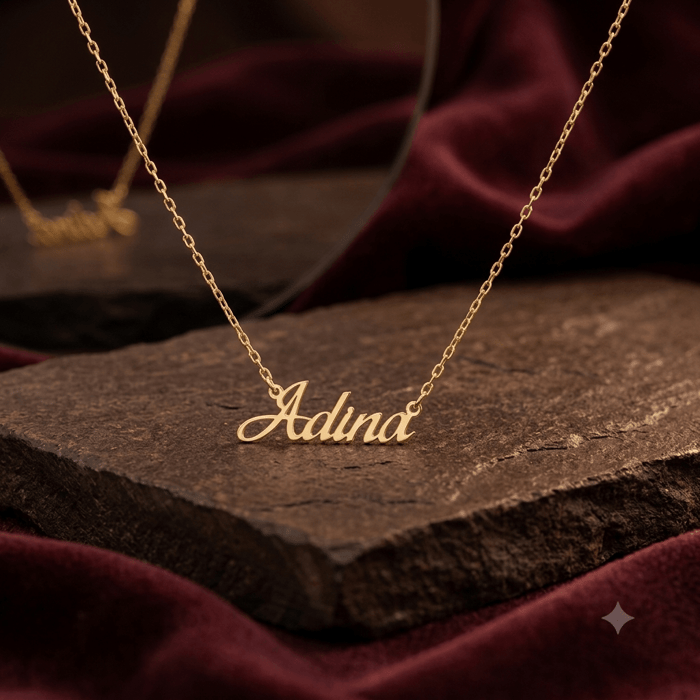
It is immediately recognizable as specific to you, which is exactly what a personalized piece should do. Wear it at the length where it reads most clearly, usually the middle or lower layer, so the lettering is visible and not buried under other pieces.
How to integrate a nameplate necklace into a layered stack:
Position it at a length where there is clear space above and below so the script is legible
Pair it with simpler chains that do not compete with the lettering for visual attention
Keep the chain styles on either side of it minimal so the nameplate remains the focal point
Choose a script size that is proportionate to the other necklaces in your stack, neither too small to read nor too large to balance
Keep Necklines in Mind When You Build Your Stack
The neckline of your outfit changes everything about how a layered necklace stack sits and reads. A stack that looks perfect with a V-neck might disappear entirely inside a crew neck or compete awkwardly with a high neckline.
Practical neckline pairing guide:
V-neck and deep scoop: A longer layered stack works perfectly here, with the longest piece following the V-line of the neckline naturally.
Crew neck and round neck: Keep the stack shorter and closer to the collarbone so pieces sit above the fabric rather than tucking into it.
Off-shoulder and strapless: A longer, more dramatic stack reads beautifully with nothing competing at the shoulder.
High neck and turtleneck: A short choker or collarbone-length piece worn outside the fabric is the only necklace that works cleanly here.
Shirt collar and button-down: Layer inside an open collar for a classic, well-dressed look, or outside for a more relaxed approach.
Adjusting your stack for the neckline rather than forcing the same stack onto every outfit is one of the habits that separates people who look consistently well put-together from those who do not.
Know When to Stop Adding Pieces
This is the most overlooked part of necklace layering. More is not always better. The goal is a stack that looks intentional and curated, not one that looks like everything went on at once.
Signs you have reached the right stopping point:
Each necklace in the stack is individually visible and readable
The overall look has a clear focal point rather than equal visual weight distributed across every piece
The stack moves and sits comfortably without constant tangling or adjustment
Removing any single piece would leave a visible gap rather than just reducing the volume
Signs you have gone too far:
Individual necklaces are no longer distinguishable as separate pieces
The stack is tangling throughout the day requiring constant attention
The overall look feels heavy or overwhelming against the outfit
Adding one more piece feels like an obvious improvement, which usually means the current stack needs editing rather than addition
The Bottom Line
Layering a 14KT gold-plated necklace well is about following a few clear principles consistently. Graduate your lengths, vary your chain styles, add one piece with color or stones, include something personal, and know when to stop. Do those five things, and your necklace stack will look intentional every time.