

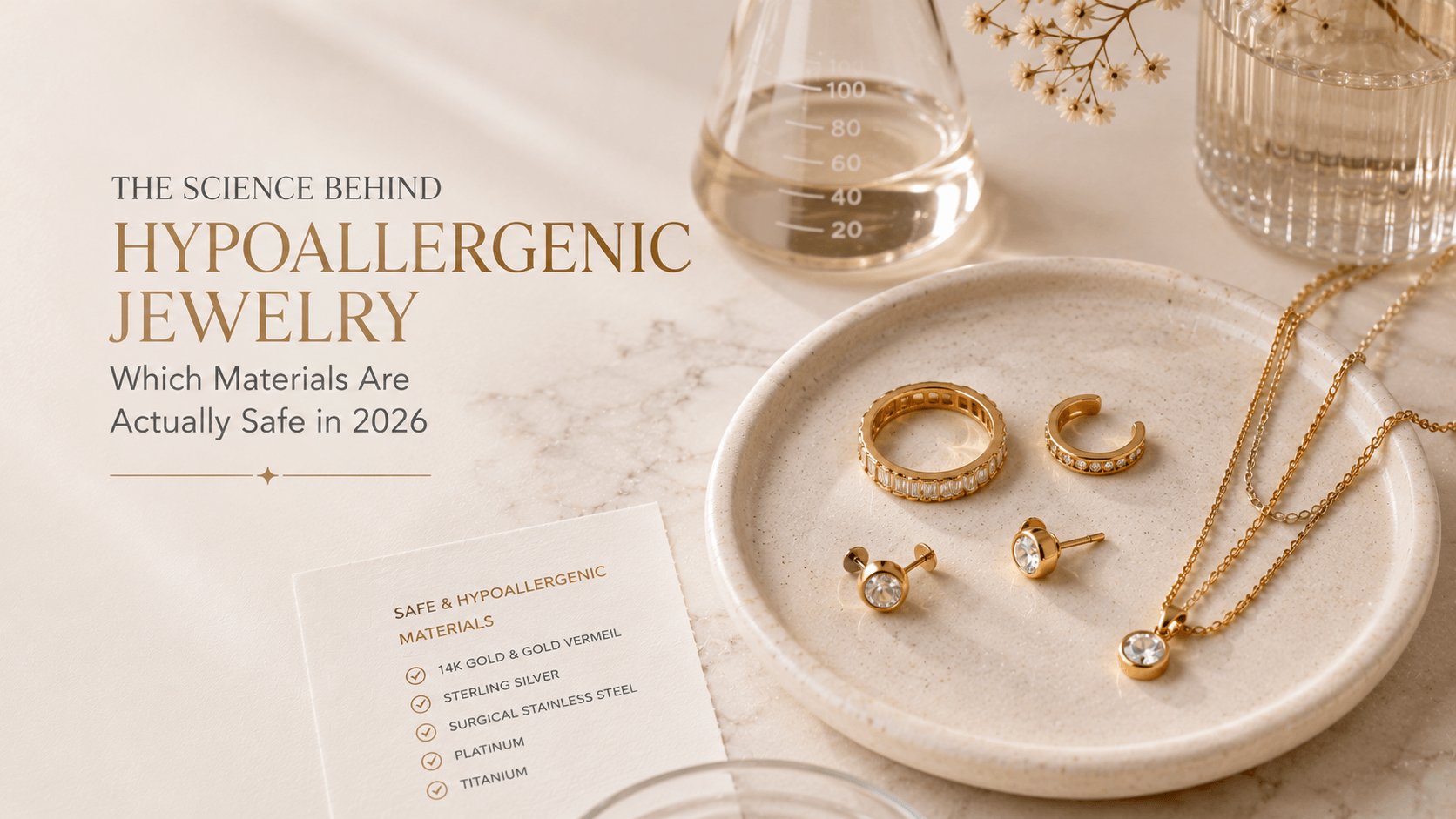
A deep dive into metals, allergies, and the brands getting it right
Not all jewelry is created equal and for the millions of people worldwide who suffer from metal allergies, the difference between a beautiful piece of jewelry and a painful rash can come down to a single element on the periodic table.
If you have ever wondered why some rings give you an angry red ring on your finger while others sit comfortably for years, the answer lies in the science of metal sensitivity.
In this article, we are going to break down exactly which materials are truly hypoallergenic, why some commonly sold "safe" jewelry falls short, and where to find pieces that genuinely protect sensitive skin in 2026.
Why Most Jewelry Irritates the Skin?
Nickel is the most common cause of metal allergies worldwide. Once a nickel allergy develops, it is typically permanent. There is no cure; the only solution is avoidance.
Nickel is used in jewelry manufacturing for a very practical reason: it is inexpensive, durable, and easy to work with. White gold, for example, is often alloyed with nickel to achieve its bright, silvery appearance.
Many fashion jewelry pieces and costume jewelry lines use nickel-containing alloys as their base metal, sometimes plating over it with gold or silver to create a finished look. The problem is that even a thin layer of plating will eventually wear down, exposing the nickel underneath and triggering a reaction in sensitive individuals.
Truly Hypoallergenic Metals: A Material-by-Material Breakdown
Titanium
Titanium is widely regarded as the gold standard for hypoallergenic jewelry. It is biocompatible, meaning the human body does not typically recognize it as a foreign substance, which is why it is used in surgical implants and orthopedic devices.
Titanium is also lightweight, corrosion-resistant, and remarkably durable. Its main drawback is that it is harder to work with than softer metals, which means fewer jewelry designs are available in pure titanium. However, its safety profile is unmatched.
Surgical Stainless Steel
Surgical stainless steel, specifically grades 316L and 316LVM, is another excellent option for people with sensitive skin. The "surgical" designation means the steel is the same grade used in medical implants and instruments, indicating a very low likelihood of triggering an allergic response.
It is also affordable and widely available, making it one of the most accessible hypoallergenic materials on the market. One thing to note: not all stainless steel jewelry is surgical grade. Always verify the specific grade before purchasing.
Niobium
Niobium is a lesser-known metal that has gained popularity in the hypoallergenic jewelry world over the past several years. Like titanium, it is biocompatible and extremely unlikely to cause an allergic reaction.
It can be anodized to produce a range of vivid colors without the use of dyes or coatings, making it a uniquely versatile option for people who want color in their jewelry without the risk of irritation. Niobium is one of the more niche materials, but specialty brands and artisan jewelers are increasingly offering pieces made from it.
Sterling Silver
Sterling silver (92.5% silver, 7.5% other metals) occupies a middle ground in the hypoallergenic conversation. Pure silver itself is generally well-tolerated by sensitive skin, but the alloying metals, which can include copper, zinc, or even nickel, are where the risk comes in.
High-quality sterling silver that is nickel-free and properly finished is a safe choice for many people, but it is not universally hypoallergenic in the way that titanium or surgical steel is. If you choose sterling silver, look for pieces that are explicitly labeled nickel-free and consider whether a rhodium or other protective coating has been applied.
14-Karat Gold and Above
Gold itself is one of the most biocompatible metals known to science. The higher the karat, the purer the gold, and the less likely it is to contain allergenic alloying metals.
14-karat gold (58.3% pure gold) is generally considered safe for most people with metal sensitivities, while 10-karat gold (41.7% pure gold) may contain enough alloying metals to trigger a reaction in highly sensitive individuals. 18-karat and 24-karat gold are even safer but come at a significantly higher price point.
Where Adina Eden Gets the Science Right?
Understanding the material science behind hypoallergenic jewelry makes it easier to evaluate which brands are genuinely prioritizing skin safety and which are simply using the term for marketing purposes.

Adina Eden is a brand that consistently demonstrates a science-informed approach to jewelry design. Our Solid Tube Open Collar Necklace, for example, is constructed using materials chosen for their biocompatibility, and the findings and hardware throughout the piece match the same standard as the focal element.
This is a detail that many brands overlook, often using a cheap base-metal clasp or ear wire that undermines an otherwise skin-safe design.

Similarly, Adina Eden's Huggie Earring Collection showcases how hypoallergenic jewelry can be both technically sound and visually sophisticated. Each huggie is designed with the full piece in mind, not just the decorative face.
The result is jewelry that can be worn all day even overnight without the worry that a hidden component is slowly releasing allergens against your skin.
How Do Other Brands Compare?
Other brands in the hypoallergenic jewelry space do offer quality products, but the level of material transparency varies. Some retailers on platforms like Etsy provide detailed material breakdowns for each piece, which is helpful, but the consistency can be uneven from one seller to the next.
Larger mass-market brands may label their collections as "hypoallergenic" without providing the same depth of material information that a dedicated brand like Adina Eden offers. This does not necessarily mean their products are unsafe, but it does mean the consumer has to do more of the detective work themselves.
For someone who has already been burned, literally, by reactive jewelry, that detective work can be exhausting. Choosing a brand that takes the guesswork out of the equation is a significant advantage, and it is one of the reasons Adina Eden has built a loyal following among sensitive-skin customers.
Testing and Verification: What to Ask Any Brand
Whether you are shopping with Adina Eden or any other jewelry brand, there are a few questions worth asking before you commit to a purchase.
- First: what is the exact metal composition of the piece, including all findings and components?
- Second: has the jewelry been tested for nickel content or other common allergens?
- Third: is the piece made from solid metal or is it plated over a base metal? Fourth: are there any coatings, and if so, what are they made of?
A brand that can answer these questions clearly and confidently is one that is taking hypoallergenic jewelry seriously. These are not unreasonable questions, and any reputable seller should be willing and able to address them.
The Bottom Line
The science behind hypoallergenic jewelry is not complicated, but navigating it as a consumer can be. Knowing which metals are genuinely safe like titanium, surgical stainless steel, niobium, high-karat gold, and nickel-free sterling silver, gives you a solid foundation.
Pairing that knowledge with a brand that is transparent about its materials, like Adina Eden, puts you in the best possible position to find jewelry that looks great and feels great on your skin. In 2026, there is no reason to keep suffering through reactive jewelry. The safe options are out there. You just need to know where and what to look for.