

When you buy a fine jewelry piece for the first time, the instinct is to focus entirely on the purchase itself: the quality, the design, the price. What is less obvious is that protecting that piece starts the moment it leaves the store.
Fine jewelry made from solid 14K gold and lab-grown diamonds is built to last. But lasting beauty is not automatic. It comes from a few consistent habits that most first-time buyers do not think about until something goes wrong.
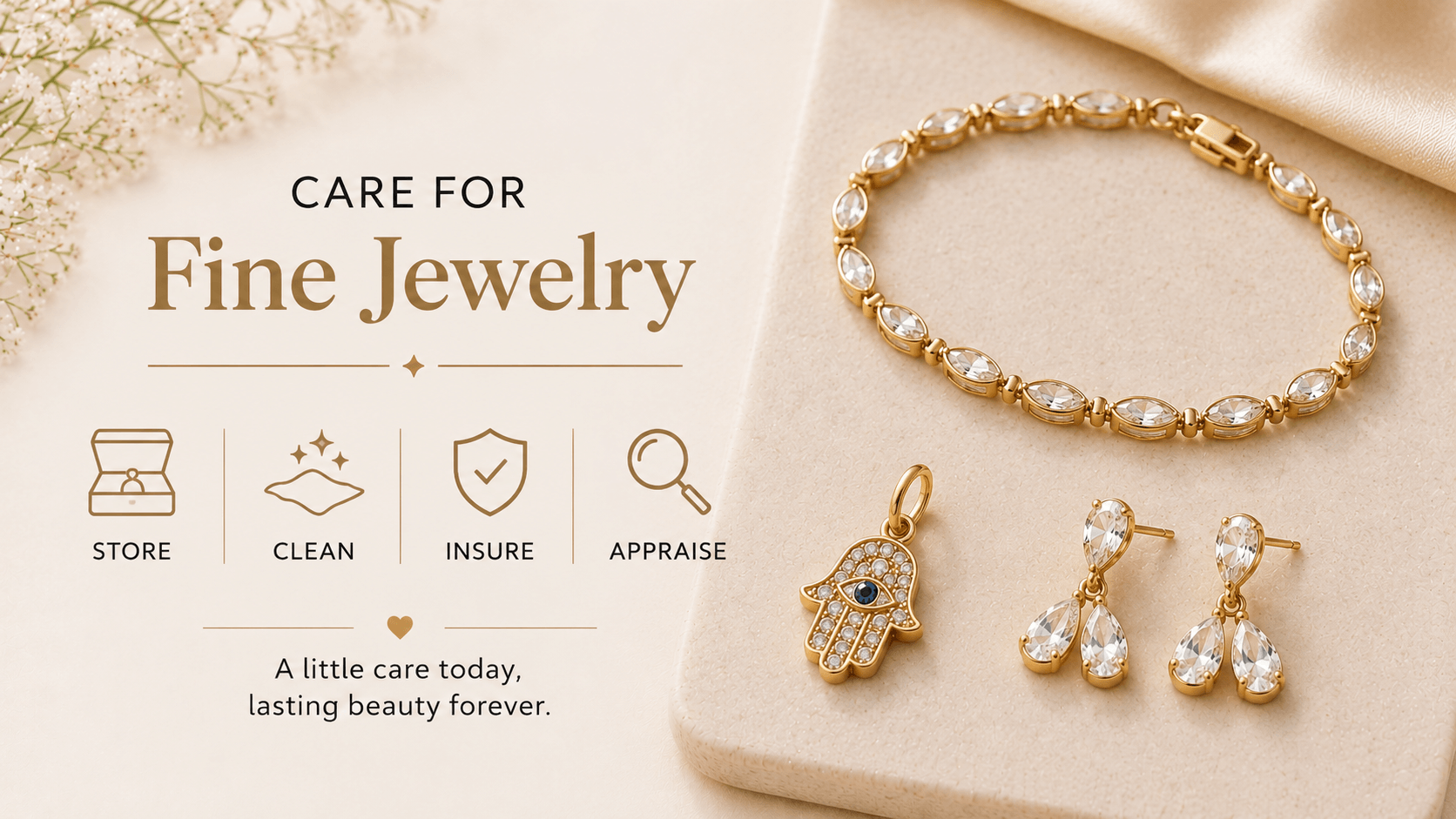
The good news: proper care is not complicated. It breaks down into four areas that work together as one protection system:
- Storage: keeping pieces separate and away from conditions that cause damage
- Cleaning: a simple routine that preserves metal and stone without harsh chemicals
- Insurance: documentation that protects replacement value if a piece is lost, stolen, or damaged
- Appraisal: a formal record that keeps your coverage accurate as time and market prices change
This guide covers all four, with practical steps written specifically for 14K gold and lab-grown diamond jewelry.
How Should You Store Fine Jewelry at Home?
The single most common cause of preventable jewelry damage is storage. Pieces left in a pile, tossed into a drawer
Or kept on a bathroom counter are exposed to scratching, tangling, humidity, and chemical residue from everyday products.
Jewelers of America recommends storing each piece in a fabric-lined case with individual compartments, in a dry, temperature-controlled space. That standard applies directly to 14K gold and lab-grown diamond pieces.
Storage do's
- Store each piece separately in its own fabric-lined pouch, box, or divided jewelry case
- Keep your storage area away from direct sunlight, heating vents, and humidity
- Return pieces to storage after every wear rather than leaving them out on a surface
- Use the original box or pouch your jewelry came in if it is lined and protective
Storage don'ts
- Do not store fine jewelry in the bathroom, where steam and product residue accumulate
- Do not pile pieces together, even in a drawer with dividers; metal and stone surfaces scratch each other
- Do not leave rings near the sink or on a windowsill where they can be knocked off or exposed to temperature swings
For higher-value pieces you do not wear daily, a home safe or bank safe deposit box is worth considering. It adds a layer of physical security that a jewelry box alone cannot provide.
What Is the Safest Way to Clean 14K Gold and Lab-Grown Diamond Jewelry?
Routine cleaning keeps fine jewelry looking its best and prevents buildup that dulls metal and reduces a diamond's brilliance over time. The good news is that the safest method is also the simplest.
Lab-grown diamonds share the same physical and optical properties as natural diamonds, which means they respond to cleaning the same way. The method below works for both the stone and the 14K gold setting.
Step-by-step cleaning routine
- Fill a small bowl with warm (not hot) water and add a few drops of mild dish soap
- Submerge the piece and let it soak for 20 to 30 minutes to loosen oil and residue
- Use a soft-bristled toothbrush to gently scrub around the setting, prongs, and any textured surfaces
- Rinse thoroughly under warm running water, making sure no soap remains in the setting
- Pat dry with a lint-free cloth and allow the piece to air dry completely before storing
Adina Eden's jewelry care guidance aligns with this approach: mild cleaners, gentle handling, and proper drying before storage.
What to avoid
- Bleach, chlorine, and acetone-based products; these can damage metal and loosen settings
- Abrasive cloths or paper towels that scratch gold surfaces
- Ultrasonic cleaners at home unless the manufacturer or jeweler has confirmed they are safe for your specific piece
- Cleaning while wearing the piece near an open drain
Professional cleaning once a year is also worth scheduling. A jeweler can inspect prongs, check settings, and clean areas a soft brush cannot reach.
When Do You Need Jewelry Insurance, and What Does It Actually Protect?
If a piece would be expensive or genuinely stressful to replace out of pocket, it is worth insuring. That threshold is lower than most first-time buyers assume.
A standard homeowners or renters insurance policy may include some jewelry coverage, but it often comes with sub-limits and may not cover accidental loss.
A standalone jewelry insurance policy, through providers like Jewelers Mutual, is designed specifically for fine jewelry and can cover theft, loss, and accidental damage with fewer exclusions.
What to keep on file from day one
- Purchase receipt: proof of what you paid and when
- Product details: metal type, stone specifications, carat weight, and any certifications (such as an IGI certificate for lab-grown diamonds)
- Photos: clear images of each piece from multiple angles, stored digitally in a secure location
- Appraisal document: a formal valuation from a certified appraiser, separate from your receipt
The most common mistake first-time buyers make is assuming the receipt is enough. It documents what you paid, not what it would cost to replace the piece today. That is what an appraisal is for, and why the two documents serve different purposes.
What Is a Jewelry Appraisal, and How Often Should You Update It?
A jewelry appraisal is a written document from a certified appraiser that establishes the replacement value of a piece. It is not the same as your receipt, and it is not the same as a grading report or IGI certificate, though those documents support the appraisal process.
Insurance companies use the appraised value to determine coverage limits. If your appraisal is outdated, your piece may be underinsured, which means a claim payout may not cover the full cost of replacement.
How often should you update a jewelry appraisal?
- Every 2 years for actively worn pieces, as a general standard. Jewelers Mutual recommends this cadence specifically because market conditions and material costs change over time.
- Sooner if the piece has been repaired, reset, or upgraded with new stones
- After major market shifts in gold or diamond prices that would meaningfully change replacement cost
What to look for in an appraiser
- Credentials from a recognized body such as the Gemological Institute of America (GIA) or the American Society of Jewelry Appraisers (ASJA)
- A written appraisal that includes metal type, stone details, measurements, and replacement value
- Independence from the retailer where you purchased the piece, for an unbiased valuation
A Simple Fine Jewelry Protection Routine for First-Time Owners
You do not need a complicated system. A few consistent habits, repeated regularly, are enough to keep fine jewelry in good condition and properly documented.
After every wear
- Wipe each piece with a soft, dry cloth to remove skin oils, lotion, and residue
- Do a quick visual check for loose stones or bent prongs
- Return the piece to its individual storage pouch or compartment
Every few months
- Do a deeper clean using the warm water and mild soap method
- Check that storage pouches and boxes are still clean and dry
Once a year
- Schedule a professional cleaning and inspection with a jeweler
- Review your insurance coverage and confirm your appraisal is current
From day one
- Keep your receipt, product details, photos, and appraisal in one organized folder, digital or physical
- Note the purchase date and appraised value so you know when an update is due
Protecting Your Jewelry Protects Your Investment
Fine jewelry is meant to be worn, enjoyed, and passed on. Caring for it properly is not a burden; it is part of owning something that was built to last.
Key takeaway: Store pieces separately, clean them gently and regularly, insure anything you would struggle to replace, and keep your appraisal current. Those four habits cover everything a first-time buyer needs.
If you are ready to invest in pieces built from solid 14K gold and lab-grown diamonds, explore the Adina Eden fine jewelry collection and the lab-grown diamond range. Every piece is designed to be worn, and with the right care, to stay beautiful for years.
FAQs
How should I store fine jewelry at home?
Store each piece separately in a fabric-lined pouch, box, or divided jewelry case, in a dry, temperature-controlled space away from direct sunlight and humidity. Avoid the bathroom, piling pieces together, or leaving rings near a sink or windowsill.
What is the safest way to clean 14K gold and lab-grown diamond jewelry?
Soak the piece in warm water with a few drops of mild dish soap for 20–30 minutes, gently scrub with a soft-bristled toothbrush, rinse thoroughly, and pat dry with a lint-free cloth. Avoid bleach, chlorine, acetone, abrasive cloths, and at-home ultrasonic cleaners unless confirmed safe by a jeweler.
Do I need insurance for fine jewelry, and what does it cover?
Insurance is worth considering if a piece would be expensive or stressful to replace. Standalone jewelry insurance (through providers like Jewelers Mutual) typically covers theft, loss, and accidental damage with fewer exclusions than a standard homeowners or renters policy.
How often should a jewelry appraisal be updated?
As a general standard, every 2 years for actively worn pieces. Update sooner if a piece has been repaired, reset, or upgraded, or after major shifts in gold or diamond market prices.
What's the difference between a jewelry receipt and an appraisal?
A receipt documents what you paid at purchase, while an appraisal is a formal valuation from a certified appraiser that establishes current replacement value — the figure insurance companies use to determine coverage