

Deciding to invest in fine jewelry is a different mindset shift from buying fashion pieces. You are no longer shopping for the season. You are building something that compounds over time: a small, considered collection of pieces that work across years, outfits, and occasions.
The challenge is knowing where to start. Walk into any fine jewelry category, and the options are overwhelming. Solid 14K gold, lab-grown diamonds, natural stones, different settings, different weights. Without a framework, it is easy to either buy the wrong things first or stall entirely.
This guide cuts through that. Here is exactly how to approach building a fine jewelry collection from scratch.
The core principle is to start with versatility, then layer in personality. Your first few pieces should work with almost everything you own. The distinctive, statement-forward pieces come later, once you have a solid base.
What Does "Fine Jewelry" Means?
Not all jewelry marketed as "fine" is the same, and the distinction matters when you are spending real money. The key variables are:
- Metal: Solid 14K gold is the standard for fine jewelry. It is durable, hypoallergenic for most people, and retains its appearance over decades. Gold-plated pieces (even high-quality ones) will eventually show wear at friction points. If longevity is the goal, solid gold is the baseline.
- Stones: Natural diamonds, lab-grown diamonds, and moissanite are all legitimate options depending on your priorities. Lab-grown diamonds are chemically identical to natural diamonds and are graded the same way (color, clarity, cut, carat). They offer significantly more stone for your budget. Moissanite has exceptional brilliance and fire, often more than a diamond, at a lower price point.
- Certification: For diamond pieces, look for IGI or GIA certification. It confirms the stone's grade independently of the retailer.
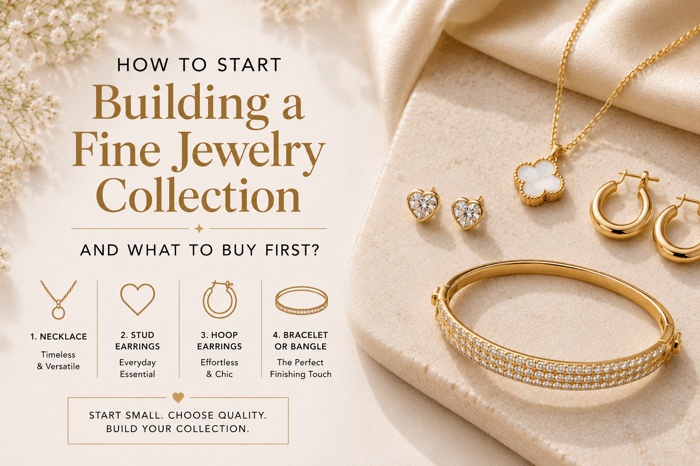
Build Your Base: The Four Foundational Pieces
A well-built base collection does not require many pieces. It requires the right pieces. These four categories cover the majority of occasions and outfit combinations you will encounter.
1. A Simple Gold Necklace
This is your most-worn piece. It sits close to the neck or at the collarbone, works under a blazer or over a simple tee, and anchors any stack you build later. Start with something clean like the Mother Of Pearl Bezel Flower Necklace 14K, which has a delicate chain with a small pendant, or a plain chain at a length that flatters your neckline.
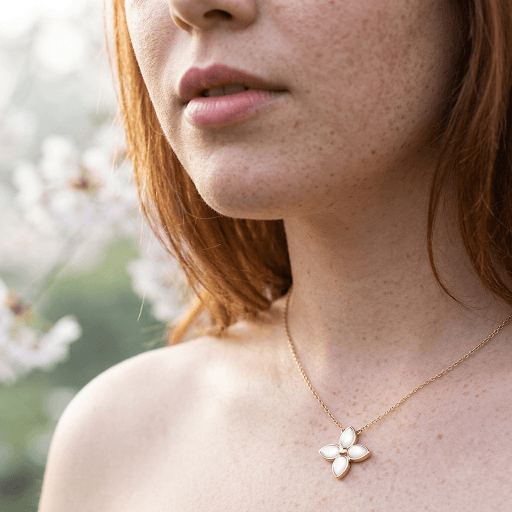
Avoid anything too trend-specific at this stage. A chunky statement chain is great to add later. Your first gold necklace should be something you can wear every single day without thinking about it.
2. A Pair of Diamond or Diamond-Equivalent Studs
Stud earrings are the most versatile earring category in fine jewelry. A small diamond or lab-grown diamond stud such as Adina Eden’s Lab Grown Diamond Heart Slight Bezel Stud Earring 14K works with every hairstyle, every outfit, and every occasion from a work meeting to a wedding.
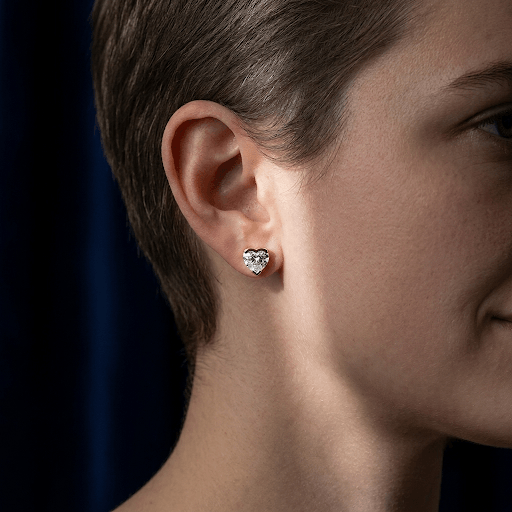
For your first pair, a round or oval stone in a classic prong or bezel setting is the safest choice. Bezel settings offer a slightly more modern look and protect the stone well for everyday wear.
3. A Solid Gold Hoop
Once you have studs, a solid gold hoop like the Solid Lightweight Hoop Earring 14K gives you an alternative earring option that still reads as refined. The size is a personal preference, but a medium hoop (roughly 20- 30 mm) hits the sweet spot between subtle and visible.

Inside-out hoop designs, where stones face both inward and outward, reflect light from multiple angles. They add visual interest without crossing into statement territory, which makes them ideal as a second earring in your collection.
4. A Dainty Bracelet or Bangle
A fine bracelet is the piece most people skip initially, but it completes the picture. A slim solid gold bangle or a thin chain bracelet with a small diamond accent adds dimension to your wrist without competing with your other pieces.
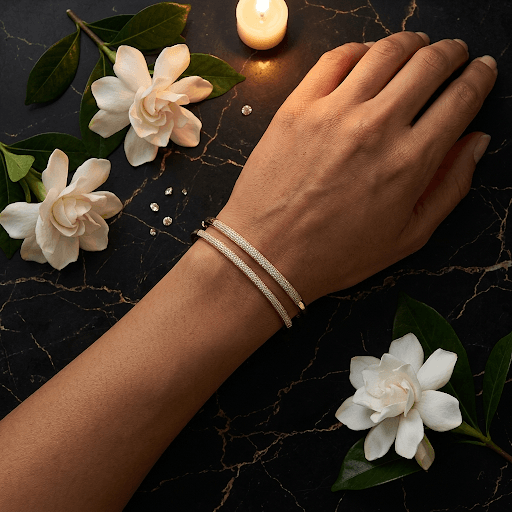
This is also a category where lab-grown diamonds deliver real value. A tennis bracelet or a pavé bangle in natural diamonds, like the Diamond Pave Triple Row Bangle Bracelet 14K, gives you a piece that looks substantial without the cost of a natural diamond equivalent.
How to Sequence Your Purchases?
The order in which you buy matters. Buying everything at once usually results in pieces that do not work together. Buying sequentially lets each piece inform the next. A practical sequence to follow:
- Start with earrings. Studs are the lowest-commitment entry point. They sit close to the face, require no styling decisions beyond the stone and setting, and you will wear them constantly.
- Add a necklace second. Once you have earrings, you can choose a necklace length and style that complements them rather than competing. Simple studs pair with almost any necklace, which gives you flexibility.
- Layer a bracelet third. With your neck and ears covered, a bracelet rounds out the look. At this point, you also have a sense of whether you are gravitating toward a minimal aesthetic or something with more visual weight, which helps you choose the right bracelet style.
- Add a ring last, or as a statement piece. Rings are the most personal category. They can be deeply sentimental, highly personalized, or purely aesthetic. Treat them as the point where you start introducing more personality into the collection.
One metal tone throughout. The most common mistake when building a fine jewelry collection is mixing yellow gold and white gold without intention. Pick one and stay consistent for your base pieces. You can introduce mixed metals later once the foundation is set.
When to Move Beyond the Basics?
Once you have your four foundational pieces, you are no longer building a collection from scratch. You are editing and expanding it. This is where the more distinctive pieces come in: a statement necklace with a larger stone, a cocktail ring, a layered chain set, colored stones, or a piece with an unusual silhouette.
The rule here is simpler: buy what genuinely excites you. At this stage, you have the base covered. Any new addition is a personality, not a necessity.
A few questions worth asking before adding a piece beyond the base:
- Does it work with at least three things I already own (outfits and jewelry)?
- Is it something I will still want in five years, or is it purely trend-driven?
- Does it complement my existing pieces, or does it require a completely different styling approach?
If the answer to all three is yes, it is worth adding. If it only satisfies one, it might be better suited for a fashion piece rather than a fine jewelry investment.
The Bottom Line
Building a fine jewelry collection is not about buying the most expensive pieces available. It is about buying the right pieces in the right order, in materials that will hold up over time.
Start with solid 14K gold. Choose lab-grown diamonds if you want diamond pieces at a price that lets you buy more than one. Build your base with studs, a necklace, a hoop, and a bracelet before you add anything more expressive. Keep your metal tones consistent until you have a foundation that works.
The collection grows from there on its own terms. Each new piece has context to work within, which makes every addition more intentional and more wearable than if you had bought it without a plan.
FAQs
What should you buy first when building a fine jewelry collection?
Start with the pieces you will wear most often, usually stud earrings or a simple gold necklace. These sit closest to the face, work with almost everything, and make the easiest foundation for a collection you can build on over time.
Is solid 14K gold worth it for a first fine jewelry purchase?
Yes. Solid 14K gold is the best starting point for a fine jewelry collection because it is durable, holds up well to everyday wear, and keeps its appearance far longer than plated jewelry. It gives you a true long-term base.
Are lab-grown diamonds a good choice for a beginner?
Lab-grown diamonds are an excellent choice if you want real diamond pieces without stretching your budget too far. They offer the same physical properties as natural diamonds and let you buy higher-quality stones or more pieces for the same spend.
How many pieces do you need to start a fine jewelry collection?
You do not need many. A strong starting collection usually includes a pair of studs, a necklace, a hoop, and a bracelet. Those four categories cover most outfits and occasions without forcing you into unnecessary purchases.
Should you mix gold tones when starting?
It is easier to start with one metal tone for your base collection, usually yellow gold or white gold. That keeps the pieces cohesive and makes styling simpler. You can add mixed metals later once your foundation is complete.