

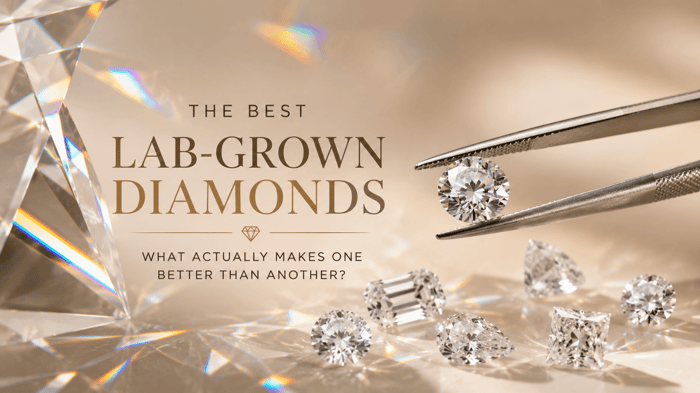
The best lab-grown diamonds come down to four things:
- cut quality,
- color grade,
- clarity grade, and
- how the stone is set.
A diamond can be lab-grown and still vary wildly in quality from one piece to the next, the same way two natural diamonds can look completely different depending on how they were cut and graded.
If you assumed all lab-grown diamonds are basically interchangeable, that assumption is costing you the ability to spot real value.
This matters more now than ever because lab-grown diamonds have become mainstream. Jewelry shoppers are no longer choosing between lab-grown and natural just on price. They are comparing lab-grown options, and the differences between a great piece and a mediocre one are often hidden in the fine print.
Below, we break down exactly what sets a high-quality lab-grown diamond apart from a lower-quality one, using real product examples so you can see what these differences look like in practice.
Cut Determines How Much the Diamond Actually Sparkles
Cut is the single factor that affects sparkle more than size, more than clarity, and often more than color. A poorly cut diamond, lab-grown or natural, will look dull no matter how big it is. A well-cut stone bounces light back to your eye in a way that reads as brilliance.
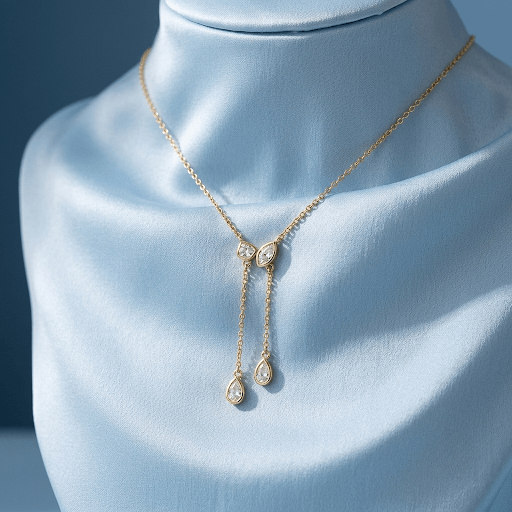
This is where shape and cut style come into play. The Adina Eden Lab Grown Diamond Multi Shape Bezel Drop Chain Lariat uses a multi-shape cut, meaning the diamonds along this lariat necklace are not uniform round stones but a mix of cuts set in bezel settings.
Key specs on this piece:
- Total carat weight of 0.35 carats across the diamonds
- Sterling silver base with a gold finish
- 16-inch chain length with a 2-inch extender for adjustable wear
- Multi-shape cut diamonds set in individual bezels
This adds visual interest and movement, since light hits each facet differently depending on the shape. The multi-shape design is a good example of how cut variety, not just cut quality, can make a piece feel more dynamic than a single round-cut stone repeated over and over.
Compare this to mass-market brands that often default to a single round brilliant cut across their entire lab-grown lineup. Round cuts are reliable and classic, but they do not offer the same textural variety.
Brands like James Allen and Blue Nile focus heavily on round and princess cuts for lab-grown diamonds, which works well for solitaire styles but offers less design range for fashion-forward pieces like lariats and multi-stone settings.
Color Grade Is the Difference Between Icy White and Slightly Warm
Diamond color grading runs on a letter scale, with D being colorless and grades moving down toward more visible yellow or brown tint as you go further down the alphabet. Most people assume any lab-grown diamond will look perfectly white, but that is not automatically true.
Color grade still matters just as much in lab-grown stones as it does in natural ones. A G color grade sits in the near-colorless range. It is not as icy as a D or E grade, but it still reads as bright and clean to the naked eye, especially when set in gold rather than platinum or white metal.
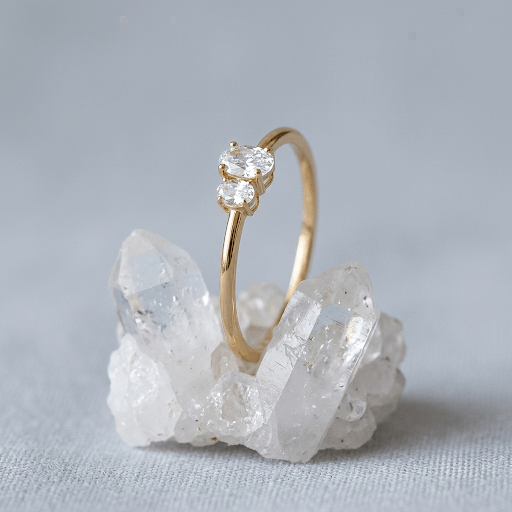
The Adina Eden Lab Grown Diamond Double Oval Ring uses this exact combination:
- G color grade, near-colorless on the diamond scale
- VS1 clarity rating
- Double oval cut design
- Available in sizes 6, 7, and 8
The oval cut shape elongates the look of the stone, which can make a G color grade appear even brighter because oval cuts tend to show off more surface area than round cuts at the same carat weight.
This is a detail many lower-cost lab-grown sellers skip mentioning entirely. If a retailer does not list a color grade at all, that is often a sign the stone sits lower on the scale, somewhere in the H through J range, where warmth becomes more noticeable, particularly in larger stones or pieces set in white gold.
Clarity Grade Affects Whether You Can See Internal Flaws
Clarity measures how many internal or surface imperfections a diamond has, called inclusions. The scale runs from Flawless down through Included, with VS1 and VS2, meaning Very Slightly Included, sitting solidly in the middle.
At VS1, any inclusions present are typically invisible to the naked eye and only show up under magnification, which means the diamond looks completely clean in everyday wear.
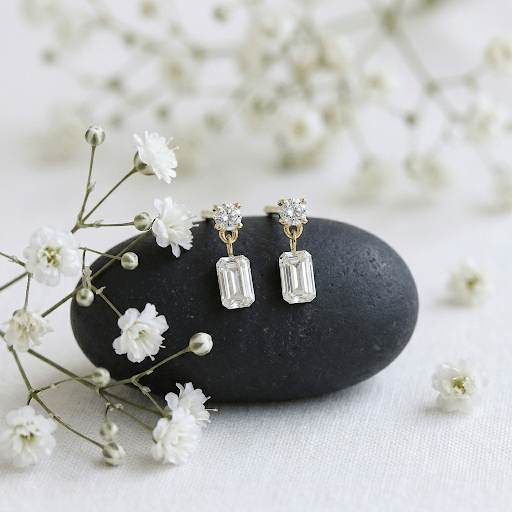
This is the clarity grade used across multiple Adina Eden lab-grown pieces, and it is worth understanding why that grade matters in cuts that expose more of the stone. The Adina Eden Lab Grown Diamond Drop Emerald Stud Earring 14K is a strong example:
- 0.79 carat lab-grown diamond
- Drop style cut
- VS1 clarity grade
- Solid 14K gold setting, available in yellow gold or white gold
- Secure post back closure
Because drop and emerald style cuts show more of the stone's surface, a VS1 clarity grade here does real work to keep the diamond looking clean rather than cloudy. Lower clarity grades, like SI1 or SI2, can sometimes show faint inclusions even without magnification, especially in larger stones or exposed cuts like this one.
Many budget lab-grown retailers do not disclose clarity grade at all, which should be a red flag if you care about how the stone will actually look once it is on your ear or finger rather than just in a product photo.
Setting and Metal Quality Round Out the Full Picture
A high-grade diamond can still be undercut by a poor setting. If the prongs are thin, the bezel is uneven, or the metal underneath is low-karat or plated rather than solid, the overall piece will not hold up over time, regardless of how good the stone itself is.
This is where checking the metal type becomes just as important as checking the diamond grade. A quick way to compare metal quality across pieces:
- Sterling silver with gold finish: durable and accessible, good for everyday pieces, used in the lariat necklace and double oval ring above
- Solid 14K gold: holds up better over years of wear, resists tarnishing more effectively, used in the drop emerald stud earring above
- Gold-filled or gold-plated: thinner gold layer over a base metal, less durable over time
- Always check which category a piece falls into before comparing prices
When comparing lab-grown diamond jewelry across brands, always check whether the listing specifies solid gold, gold-filled, gold-plated, or sterling silver with a finish.
Retailers like Mejuri and Kendra Scott mix metal types across their lab-grown lines too, so this is not unique to any one brand, but it is a detail that gets buried in product descriptions more often than it should.
Price Should Reflect All Four Factors Together, Not Just Carat Size
The biggest mistake people make when comparing lab-grown diamonds is judging value purely on carat weight and price per carat. A 1-carat lab-grown diamond with a low color grade, poor clarity, and a weak cut will look worse and hold less value than a 0.5 carat stone with excellent grades across the board.
Before comparing price tags, check that the listing includes all four of these details:
- Cut style and shape
- Color letter grade
- Clarity grade
- Metal type and karat
A piece that lists all four clearly, the way the three Adina Eden pieces above do, gives you the information needed to judge real quality. A listing that only mentions carat weight and price is asking you to trust blindly, which is rarely a good position to buy fine jewelry from.
Other retailers in the lab-grown space, including Brilliant Earth and Clean Origin, do a reasonably good job of disclosing these specs as well, particularly for engagement-focused pieces.
Where Adina Eden tends to stand out is in applying that same transparency to fashion jewelry like lariats, stud earrings, and stacking rings, categories where many competitors get less detailed with their grading information.
The Bottom Line
The best lab-grown diamond for you is not the biggest one or the cheapest one. It is the one where cut, color, clarity, and setting all work together to create a piece that looks bright, holds up over time, and matches how you actually want to wear it.
Next time you are comparing options, skip straight past the carat weight and price tag, and look for all four grading details listed clearly. That single habit will save you from buying a diamond that looks good in a photo but falls flat in person.