

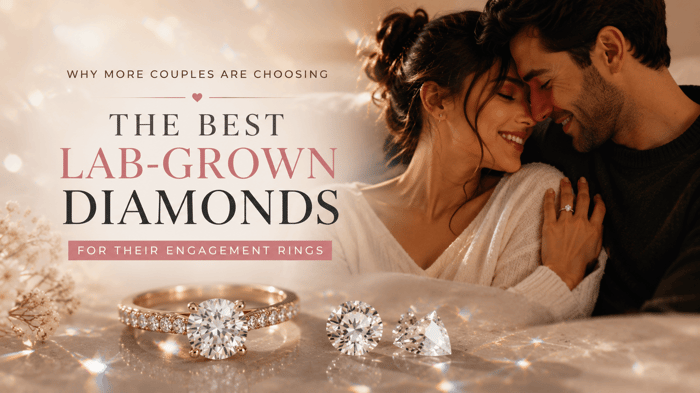
More couples are choosing lab-grown diamonds for engagement rings because they get the same brilliance and durability as a mined diamond at a fraction of the cost, with full transparency about how the stone was made.
This is not a trend built on compromise. It is a trend built on couples doing the math and realizing they can get a bigger, cleaner, more striking stone for the same budget that used to buy something smaller and lower grade.
This shift has been building for several years now, but it has accelerated recently as more fine jewelry brands expand their lab-grown collections with real grading transparency.
Below, we look at exactly why this shift is happening, using real engagement-appropriate pieces to show what couples are actually choosing and why.
The Math Behind the Shift Is Simple
Lab-grown diamonds are chemically and physically identical to mined diamonds. The only difference is the origin.
One forms in a lab using controlled heat and pressure, the other forms underground over millions of years. Because lab-grown stones skip the mining process, they generally cost forty to fifty percent less than a mined diamond of the same size and grade.
This price difference is the single biggest reason couples are switching. Here is what that savings actually buys:
- A larger center stone at the same price point as a smaller mined diamond
- A higher color and clarity grade for the same budget
- Room to add more diamonds to a setting without inflating the total cost
- More budget left over for the wedding itself
The Adina Eden Lab Grown Diamond Emerald Eternity Band 14K shows what this savings can unlock at the upper end.
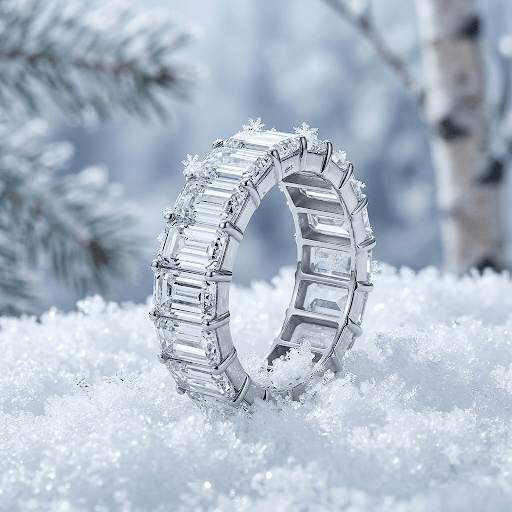
This ring features an emerald cut lab-grown diamond eternity band totaling approximately 11 carats, with an F color grade and VS1 clarity, crafted in 14K white gold and custom-made in sizes 6, 7, and 8.
A natural diamond eternity band at this carat weight and grade would typically run into a price range far outside what most couples could reasonably consider. The lab-grown version puts that kind of statement piece within reach.
Couples Want Design Variety, Not Just a Solitaire
Engagement ring shoppers used to have fairly limited options if they wanted something other than a basic solitaire.
Lab-grown diamonds, because they cost less to produce, have given jewelry designers more room to experiment with multi-stone settings, wrap designs, and dainty styles that would be harder to justify at natural diamond prices.
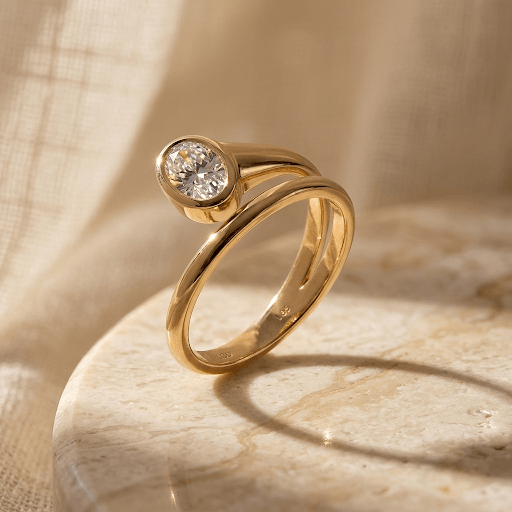
The Adina Eden Lab Grown Diamond Oval Bezel Wrapped Ring 14K is a clear example of this shift. This ring features a 0.60 carat oval cut diamond in a bezel-set wrap design, crafted in solid 14K gold with a G color grade and VS1 clarity, available in sizes 6, 7, and 8.
The wrap style is a more contemporary alternative to a traditional prong-set solitaire, and the bezel setting offers extra protection for the stone during daily wear, something couples increasingly care about for a ring they will not take off.
Compare this to the limited customization options at traditional jewelers, where bezel and wrap styles in natural diamonds often carry a steep premium.
Because lab-grown stones cost less as raw material, brands like Adina Eden can offer these more elaborate settings at prices that still feel reasonable for an engagement purchase.
Sustainability and Sourcing Transparency Matter More Than Ever
Beyond cost, a growing number of couples cite sourcing concerns as a real factor in choosing lab-grown over mined. Mined diamonds carry a complicated supply chain history, and even with certification systems in place, many buyers feel more confident knowing exactly how their stone was created.
Lab-grown diamonds offer that clarity by default. There is no question about mine origin, conflict sourcing, or environmental disruption from extraction. For couples who want their engagement ring to reflect their values as well as their style, this matters as much as the price savings.
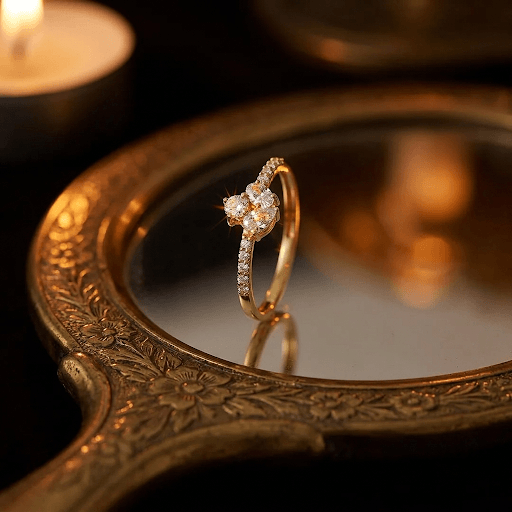
The Adina Eden Lab Grown Diamond Multi Shape Dainty Ring speaks to a different segment of this same trend, couples who want something understated rather than a large center stone.
This ring features 0.43 total carats of multi-shape lab-grown diamonds, a G color grade, and VS1 clarity, set in a gold-finished sterling silver dainty band available in sizes 6 through 9.
For couples who prioritize ethical sourcing and a minimalist aesthetic over size, this kind of piece checks every box without the cost of a larger center stone.
Certification Has Closed the Trust Gap
Early on, some couples hesitated on lab-grown diamonds simply because the category was newer and less understood. That hesitation has mostly disappeared as IGI certification has become standard practice across reputable retailers.
An IGI certificate verifies the diamond's grading independently, the same way it would for a natural stone, which means couples can shop lab-grown with the same confidence they would bring to a natural diamond purchase.
This certification matters most on higher-value pieces, where buyers want documented proof of what they are purchasing.
A large eternity band or a high-carat statement ring benefits enormously from this kind of independent verification, since the stakes and price point are higher.
What Does This Mean If You Are Choosing Between Lab-Grown And Natural?
If you are a couple weighing this decision, here is a simple way to think about it:
- If budget flexibility matters most, lab-grown gives you more stones and more setting options for the same price.
- If you want a unique or detailed setting style, lab-grown pricing makes wrap, bezel, and multi-stone designs more accessible.
- If sourcing transparency matters to you, lab-grown removes ambiguity about how the stone was created.
- If resale value is your top priority, mined diamonds still hold a slight edge in some markets, though this gap continues to narrow.
There is no universally right answer here. What has changed is that lab-grown is no longer the compromise choice.
For many couples, it is simply the smarter choice, and the growing variety of styles, from eternity bands to dainty stacking rings to wrapped statement pieces, reflects that shift in mainstream preference.
The Bottom Line
Couples are not choosing lab-grown diamonds because they are settling for less.
They are choosing lab-grown because it gives them more, more carat weight, more design freedom, and more clarity about where their stone came from, all without stretching their budget past what feels reasonable for this milestone purchase.
As certification and grading transparency continue to standardize across the industry, expect this shift to keep accelerating rather than reversing.