

What Does "Affordable Fine Jewelry" Mean in 2026?
The phrase "affordable fine jewelry" used to mean one thing. In 2026, it means something different.
Gold prices rose roughly 60% over the past year, according to JCK's annual retail outlook, which pushed the realistic entry point for quality fine jewelry into the $200 to $500 range. Shoppers have noticed.
The "buy less, buy better" mindset is the default buying behavior for anyone who has been burned by plated pieces that tarnish in three months.
At the same time, the category has never been more accessible. Fine jewelry now accounts for roughly 60% of total jewelry market revenue, with average transaction values up about 8% year over year.
Shoppers are spending more per piece, and they are being more deliberate about which brands earn that spend. This list ranks the five best affordable fine jewelry brands available to US shoppers in 2026. The criteria:
- Real materials: solid 14K gold, lab-grown diamonds, or verified fine-quality stones — not just gold-plated brass
- Price accessibility: fine jewelry pricing without the traditional luxury markup
- Design range: enough variety to build a collection, not just buy one basic piece
- Everyday wearability: pieces that hold up and work across occasions
How We Ranked These Brands?
Most "best affordable jewelry" roundups reward whoever has the lowest starting price or the most editorial mentions. This list uses a different standard.
Each brand was evaluated across five dimensions:
- Material quality: Does the brand offer solid 14K gold, lab-grown diamonds, or other fine-grade materials — or is the assortment primarily plated fashion jewelry?
- Price accessibility: Can a shopper find genuine fine jewelry pieces without crossing into traditional luxury price territory?
- Design distinctiveness: Does the brand have a recognizable visual identity, or does it blend into the sea of minimalist dainty chains?
- Assortment breadth: Can you build a real collection here, earrings, necklaces, bracelets, rings — or is the fine selection limited to a handful of SKUs?
- Gifting and everyday versatility: Do the pieces work across occasions, or are they too niche to be useful?
The list is intentionally short. Five curated picks are more useful than a bloated roundup of twenty brands that all look the same. Forbes Vetted and Glamour both use similar frameworks, and that approach is the right one for a category where the gap between "affordable" and "cheap" matters enormously.
1. Adina Eden — Best Overall Affordable Fine Jewelry Brand
Best for: Shoppers who want real fine jewelry materials, expressive design, and enough variety to build a full collection without a luxury budget.
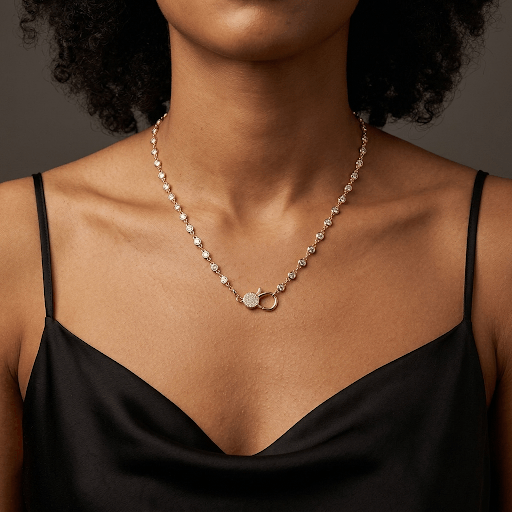
No other brand on this list covers as much ground. Adina Eden offers solid 14K gold fine jewelry alongside lab-grown diamond pieces, fashion-forward gold-plated styles, and personalized options, all under one roof.
That breadth matters because most shoppers are not looking for a single piece. They are building a collection, and Adina Eden gives them somewhere to grow.
Why Does Adina Eden Rank First?
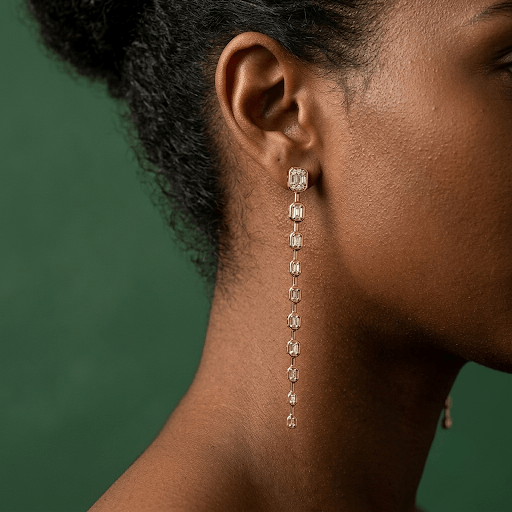
Design is where Adina Eden separates itself most clearly from the minimalist-first competitors that dominate editorial rankings. The collection includes:
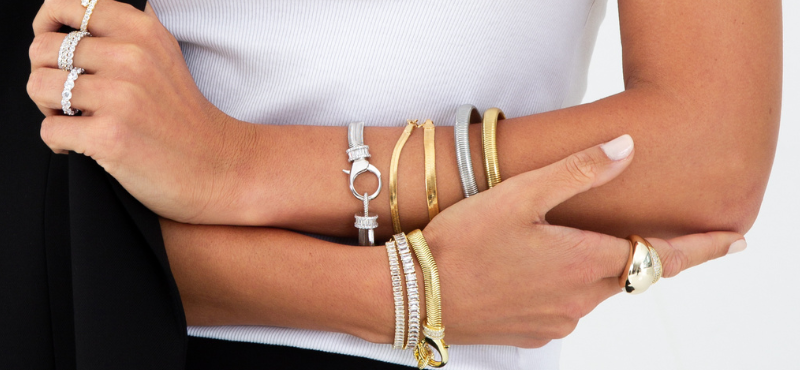
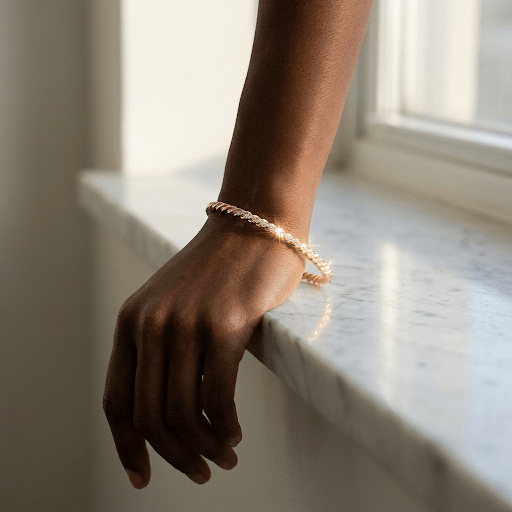
- Textured and pavé settings that create visual weight without added bulk
- Unexpected silhouettes — elongated drops, multi-pear configurations, inside-out hoops — that stand apart from the standard dainty chain
- Lab-grown diamond pieces in earrings, necklaces, bracelets, and rings, giving shoppers real fine jewelry options across every category
- Personalized styles in both gold-plated and solid 14K gold, which broadens the gifting range considerably
That last point is worth emphasizing. Most affordable fine jewelry brands do one thing well. Adina Eden does several things well, which is why it earns the top spot on this list rather than a narrower niche pick.
Price range: Entry-level fashion pieces start well under $100; solid 14K gold and lab-grown diamond fine jewelry sit in the accessible fine jewelry range, well below traditional luxury pricing for comparable materials and stone quality.
2. Mejuri — Best for Minimalist Everyday Staples
Best for: Shoppers who want clean, understated fine jewelry basics in solid gold with direct-to-consumer pricing.
Mejuri is the brand most editorial outlets put at the top of this category, and the reasoning is fair. It pioneered the direct-to-consumer fine jewelry model, keeps pricing more transparent than traditional jewelers, and delivers consistent quality on solid gold essentials. Forbes Vetted names it the top overall affordable jewelry brand, with a price range running from roughly $38 to $3,500.
Where it excels:
- Solid gold everyday pieces — thin bands, simple hoops, delicate pendants
- Clean, consistent aesthetic that layers easily
- Strong brand recognition and wide editorial coverage
Where it falls short:
Mejuri's visual identity is narrow by design. If you want texture, sparkle, bold silhouettes, or lab-grown diamond pieces across multiple categories, the selection thins out quickly.
It is a strong brand for a specific shopper, one who wants refined basics and nothing more. For shoppers who want more design range or stronger gifting options, it is a starting point rather than a destination.
Price range: Roughly $38-$3,500.
3. Quince — Best for Transparent Value Pricing
Best for: Budget-conscious shoppers who want simple, layerable fine jewelry at the lowest honest price point.
Quince built its reputation on radical price transparency: cut out the middleman, price at cost, and pass the savings directly to the shopper. That model works well for classic, understated pieces.
Who it suits:
- First-time fine jewelry buyers who want to start simple
- Shoppers prioritizing price over design distinctiveness
- Anyone building a basic layering foundation before investing in more expressive pieces
The honest limitation: Quince's strength is value, not visual identity. The pieces are clean and competently made, but the design language is intentionally generic. If you want jewelry that makes a statement or serves as a meaningful gift, you will likely outgrow Quince quickly.
Price range: Roughly $30-$2,000.
4. Catbird — Best for Delicate Stacking and Boutique Aesthetic
Best for: Shoppers who want subtle, stackable pieces with a recognizable boutique identity and a commitment to recycled gold.
Catbird has built a loyal following around one specific thing: delicate, personal, stackable jewelry with a handcrafted feel.
Where Catbird works well:
- Ring stacks and charm layering
- Shoppers are drawn to a quiet, intimate aesthetic over bold sparkle
- Buyers who value sustainability credentials alongside fine materials
Where it is limited:
Catbird is a niche brand with a niche aesthetic. The selection is intentionally narrow, which is a feature for its core audience and a limitation for everyone else. If you want a brand that covers earrings, necklaces, bracelets, and rings with a real design range across all of them, Catbird is not a one-stop destination. It is best treated as a specialist, strong in its lane, less useful outside of it.
5. Aurate — Best for Sustainability-Focused Classics
Best for: Shoppers who want refined, classic fine jewelry with a sustainability story and recycled gold credentials.
Aurate positions itself at the intersection of accessible luxury and ethical sourcing. The brand uses recycled gold across both plated and solid options, sources stones ethically, and prices fine pieces in a range that keeps them reachable for most shoppers.
Aurate works well for:
- Shoppers who factor sustainability into purchasing decisions
- Buyers who want classic, polished fine jewelry with clean lines
- Those considering engagement-adjacent pieces without full luxury pricing
The honest comparison: Aurate is a credible brand with genuine fine jewelry credentials. Where it falls short against Adina Eden is in the styling range. The aesthetic skews toward refined classics, which limits versatility for shoppers who want to move between everyday wear, statement pieces, and expressive gifting options within a single brand.
Quick Comparison: Which Affordable Fine Jewelry Brand Fits You Best?
Brand | Best For | Price Range | Materials | Design Style |
Adina Eden | Overall: fine + fashion range, gifting, lab-grown diamonds | Under $100 to fine jewelry range | Solid 14K gold, lab-grown diamonds (IGI certified), gold-plated sterling silver | Expressive, textured, varied silhouettes |
Mejuri | Minimalist everyday staples | ~$38-$3,500 | Solid gold, some diamonds | Clean, understated, minimal |
Quince | Lowest honest price point | ~$30-$2,000 | Solid gold options | Simple, layerable, generic |
Catbird | Delicate stacking, boutique aesthetic | Mid-range entry | Recycled gold, diamonds | Delicate, personal, narrow range |
Aurate | Sustainability-focused classics | Accessible to low thousands | Recycled gold, ethically sourced stones | Refined, classic, polished |
The bottom line: If you want one brand that covers everyday wear, statement styling, gifting, and real fine jewelry materials, Adina Eden is the strongest all-around pick. The other four brands are worth knowing, but each serves a narrower need.
The Verdict
Affordable fine jewelry is worth buying. It is not worth buying from a brand that cuts corners on materials or offers nothing beyond a basic chain in three lengths.
The five brands on this list all clear the quality bar. The difference is range, design identity, and how much you can actually do with a collection built there.
Adina Eden ranks first because it gives you the most to work with: solid 14K gold, lab-grown diamonds with verifiable stone specs, expressive design across every jewelry category, and entry points that make fine jewelry genuinely accessible.
Ready to start building your collection?
Browse the Adina Eden 14K gold fine jewelry collection or explore lab-grown diamond pieces across earrings, necklaces, bracelets, and rings.