

If you have ever compared two gold necklaces and wondered why one costs $180 and another costs $1,800 for what looks like the same piece, you are not missing something obvious. Jewelry pricing is genuinely confusing, and the gap between those two numbers often has very little to do with quality.
The rise of direct-to-consumer fine jewelry brands has made one thing clear: the same diamond solitaire necklace can sell for $185 at one shop and $680 at another without any meaningful difference in the metal or stone. What changes are the business model, the brand name, and the retail markup sitting between you and the actual piece.
This guide breaks down exactly what drives jewelry pricing, what "affordable fine jewelry" actually means, and how to tell the difference between a genuine value and a compromise on quality.
Key takeaway: Affordable fine jewelry uses the same precious metals and real gemstones as luxury brands. The price difference comes from how the piece is sold, not what it is made of.
What Does "Fine Jewelry" Mean?
Fine jewelry has a specific definition that most marketing language blurs. A piece qualifies as fine jewelry when it is made with precious metals and genuine gemstones, not plated base metals or synthetic simulants.
Here is what the materials breakdown looks like in practice:
Material | What to Look For | What It Signals |
Solid gold | 10K, 14K, or 18K stamp | Will not tarnish, lasts decades |
Gold vermeil | 2.5+ micron gold over sterling silver | Durable plating, real silver base |
Sterling silver | "925" or "Sterling" stamp | Genuine precious metal |
Lab-grown diamonds | IGI or GIA certificate | Identical to mined diamonds physically |
Cubic zirconia (CZ) | No certification needed | Simulant, not a genuine gemstone |
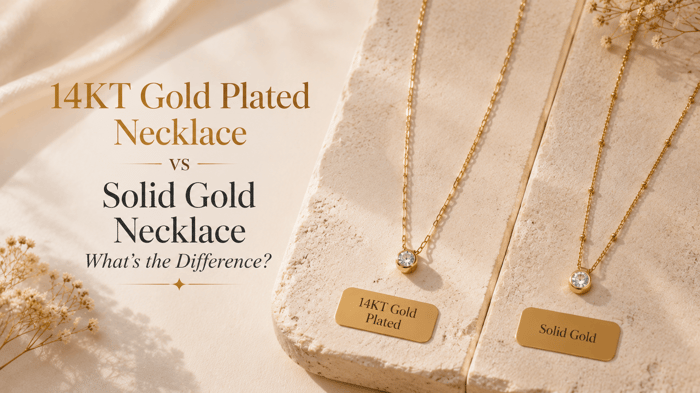
Gold-plated brass is not fine jewelry, even if it looks identical to 14K gold for the first few months. The plating wears away, the base metal tarnishes, and the piece has no lasting value. Solid 14K gold, by contrast, maintains its quality indefinitely.
Where Does Fashion Jewelry Fit?
Fashion jewelry uses non-precious metals (usually brass or zinc alloy) with a thin layer of gold or silver plating. It is designed for trend-driven, shorter-term wear. There is nothing wrong with it for that purpose. The problem is when it is marketed or priced as though it were fine jewelry.
Knowing the difference protects your investment and sets realistic expectations for how long a piece will last.
What Actually Drives Jewelry Pricing?
Once you understand what fine jewelry is, the next question is why two pieces made from the same materials can cost wildly different amounts. There are five main factors at play.
1. Raw Material Costs
This is the most straightforward part of the price. Gold, platinum, and diamonds have market values that fluctuate but are publicly tracked. A heavier 14K gold bracelet costs more to make than a lighter one. A larger diamond with better color and clarity grades costs more than a smaller, lower-grade stone.
What this means for you: Material costs are the floor, not the ceiling, of jewelry pricing. Everything above that floor is markup.
2. Gemstone Quality (The 4 Cs)
For diamonds specifically, price is heavily influenced by:
- Cut: A well-cut diamond reflects light more brilliantly and commands a higher price.
- Color: Colorless diamonds (D-F grade) cost significantly more than near-colorless stones (G-J).
- Clarity: Fewer inclusions mean higher pricing, but inclusions below VS2 are typically invisible to the naked eye.
- Carat: Larger stones are exponentially more expensive per carat, not linearly.
The insight most buyers miss: a VS1 clarity diamond and a VS2 clarity diamond look identical without magnification. Paying for VS1 is paying for a certificate number, not a visible difference.
3. Brand Markup
This is where the biggest price gaps appear, and it has nothing to do with the jewelry itself.
Traditional luxury brands carry enormous overhead: flagship retail locations in expensive cities, celebrity endorsements, advertising budgets, and the cost of brand heritage.
All of that gets built into the price tag. According to industry analysis, brand reputation and market positioning are among the primary factors that push jewelry prices far above material costs.
A direct-to-consumer brand selling online with no retail overhead can offer the same 14K gold and the same diamond quality at a fraction of the price, because you are not paying for the Fifth Avenue storefront.
4. Production Scale and Method
Small-batch artisan production creates beautiful, highly individual pieces, but the labor cost per piece is high. Large-scale production with consistent quality control brings that cost down significantly without compromising the materials or finish.
Brands that have found the right balance, consistent craftsmanship at scale, can offer fine jewelry at accessible price points without cutting corners on what actually matters.
5. Distribution Model
Every middleman between a jewelry maker and your wrist adds a markup. Traditional retail involves wholesalers, distributors, and physical stores, each taking a margin. Direct-to-consumer brands eliminate most of those layers, passing the savings to you.
The real insight: A $400 piece from a D2C fine jewelry brand and a $1,200 piece from a traditional retailer can be made from identical materials. You are paying for the channel, not the craftsmanship.
The Lab-Grown Diamond Factor
No conversation about affordable fine jewelry is complete without addressing lab-grown diamonds, because they have fundamentally changed the price-to-quality equation.
Lab-grown diamonds are physically, chemically, and optically identical to mined diamonds. They are not simulants like cubic zirconia. They are real diamonds, grown in a controlled environment rather than extracted from the earth. A gemologist cannot tell the difference without specialized equipment.
What Lab-Grown Diamonds Actually Cost
The price difference is significant. Lab-grown diamonds typically cost 50-80% less than mined diamonds of equivalent quality. That means a 1-carat, E color, VS1 clarity lab-grown diamond, the kind that would cost $6,000-$8,000 mined, can be purchased for under $2,000.
For fine jewelry buyers, this creates a real opportunity:
- You can own a 2-carat total weight diamond bracelet for what a 0.5-carat mined diamond bracelet would cost.
- You can prioritize cut and color (the factors that most affect visual beauty) without the premium for mined origin.
- You can build a collection of genuine diamond pieces instead of owning one piece you rarely wear.
What to Look for in Lab-Grown Diamond Jewelry
Certification matters. Look for pieces accompanied by an IGI (International Gemological Institute) or GIA certificate, which confirms the diamond's grade. At Adina Eden, select lab-grown diamond pieces come with IGI certification and are graded at E color and VS1 clarity, representing genuinely high-quality stones, not entry-level lab-grown.
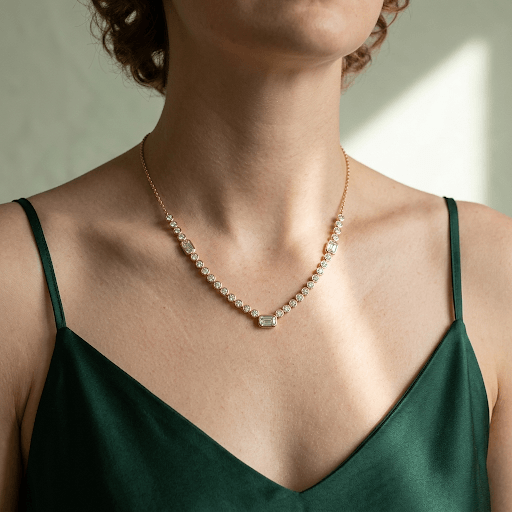
The Lab Grown Diamond Bezel Emerald Center Tennis Necklace is a good example. 1.32 total carats, G color, VS1 clarity, Emerald cut. A mined diamond equivalent would cost several times more.
How to Evaluate an "Affordable Fine Jewelry" Brand
Not every brand that calls itself affordable fine jewelry deserves the label. Here is a practical checklist for evaluating whether a brand is genuinely offering quality at a fair price, or just marketing fashion jewelry as something it is not.
Questions to Ask Before You Buy
On the metal:
- Is it solid gold (10K, 14K, or 18K) or gold-plated? Look for the karat stamp.
- If it is gold vermeil, what is the plating thickness? The minimum for quality vermeil is 2.5 microns over sterling silver.
- Does the brand clearly disclose the base metal?
On the stones:
- Are diamonds certified by IGI or GIA?
- Is the color and clarity grade disclosed, or just described vaguely as "high quality"?
- For non-diamond stones, are they natural, lab-grown, or simulants (CZ, glass)?
On the brand:
- Does the brand sell direct-to-consumer or through multiple retail layers?
- Is pricing transparent and consistent, or does everything go "on sale" constantly?
- Are there real customer reviews with specific details about quality and longevity?
Red Flags to Watch For
- Unusually low prices for claimed solid gold: Solid 14K gold has a real material cost. A "solid gold" necklace priced at $20 is not solid gold.
- Vague material descriptions: "Gold tone," "gold finish," or "gold color" are not gold.
- No certification for diamonds: A brand selling uncertified diamonds cannot verify the grade it claims.
- Heavy discount culture: Constant 70% off sales suggest the original price was inflated to begin with.
The standard to hold brands to: Good Housekeeping and Glamour both note that the best affordable fine jewelry brands are transparent about materials, offer certified stones, and use solid precious metals, not plating, as their baseline.
Where Adina Eden Fits in the Price vs. Quality Equation
Adina Eden occupies a specific and useful position in the jewelry market: the space between fast-fashion jewelry and traditional luxury, where quality materials meet accessible pricing.
The catalog spans two distinct tiers, and understanding both helps you shop with clarity.
The Fine Jewelry Tier: Solid 14K Gold and Real Diamonds
The 14K gold and diamond collection uses solid 14K gold as its base, not gold-plated brass. The diamond pieces feature natural and lab-grown diamonds with disclosed color and clarity grades. Select lab-grown pieces are IGI-certified at E color, VS1 clarity.
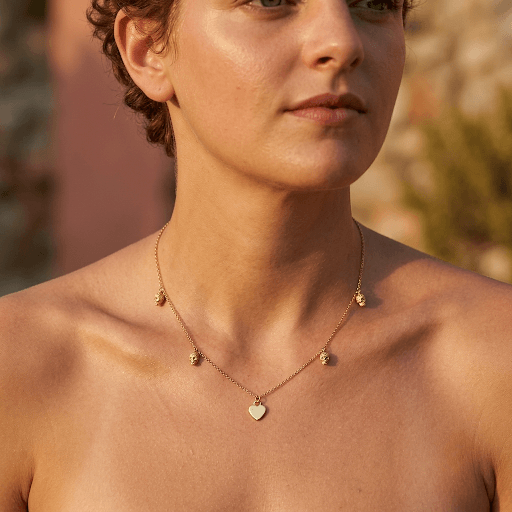
This is genuine fine jewelry at a price point that reflects the direct-to-consumer model rather than traditional retail markup. A solid 14K gold bracelet or a lab-grown diamond necklace from this tier is a piece you can wear daily, gift meaningfully, and keep for years.
The Fashion Jewelry Tier: Gold-Plated Sterling Silver
The fashion jewelry pieces use gold-plated sterling silver, not brass. That distinction matters: sterling silver is a precious metal base that holds plating better and is less likely to cause skin reactions than brass or zinc alloy. The plating will wear over time with heavy daily use, but the silver base underneath is still a real metal.
This tier is designed for trend-driven styling, layering, and pieces you want to rotate frequently. It is honest about what it is, which is the right approach.
The Value Proposition
The reason Adina Eden works as a brand is that it does not try to pass fashion jewelry off as fine jewelry. The two tiers are clearly distinct. You know what you are buying, and the pricing reflects the actual materials.
For shoppers researching top-rated fine jewelry brands with affordable prices, that transparency is the most important quality signal of all.
The Bottom Line on Price vs. Quality
Affordable fine jewelry is not a contradiction. It is a category that exists because the traditional retail model added enormous cost to jewelry that had nothing to do with the gold, the diamonds, or the craftsmanship.
When you shop with the right framework, the questions become straightforward:
- Is the metal solid gold or a precious metal base? Check the stamp.
- Are the stones what the brand claims? Ask for certification.
- Is the price reflecting real materials or a brand name and a storefront?
The best fine jewelry brands at accessible price points share one trait is that they are transparent. They tell you exactly what the metal is, what the stone grade is, and why the price is what it is. That transparency is the clearest signal that a brand is offering genuine value rather than the appearance of it.
If you are ready to build a fine jewelry collection that lasts, explore Adina Eden's 14K gold and lab-grown diamond pieces. Every piece lists the metal, the stone grade, and, where applicable, the certification. That is where the value conversation starts.
FAQs
What makes fine jewelry affordable?
Affordable fine jewelry usually comes from a direct-to-consumer model, lower overhead, and smarter sourcing. The materials can still be real precious metals and genuine gemstones, but the brand avoids the heavy retail markup built into traditional luxury pricing.
Is affordable fine jewelry still real fine jewelry?
Yes, if it uses solid gold, sterling silver, platinum, or certified genuine gemstones. The price is lower because of how it is sold, not because it is fake. The key is checking material stamps, stone certifications, and disclosure.
Why do two similar necklaces have very different prices?
Two necklaces can look nearly identical and still have very different prices because of brand markup, production method, distribution layers, and stone quality. Luxury branding, retail leases, and advertising can raise prices far beyond the cost of the metal and stones.
Are lab-grown diamonds a good value in fine jewelry?
Lab-grown diamonds are a strong value because they are real diamonds with the same physical properties as mined stones, often at a much lower price. They let you prioritize size, cut, and clarity without paying as much for mined origin.
How can I tell if a fine jewelry brand is worth the price?
Look for clear material disclosures, verified stone certifications, transparent pricing, and consistent customer reviews. If a brand is vague about metals, hides stone grades, or constantly runs huge discounts, that is usually a red flag