

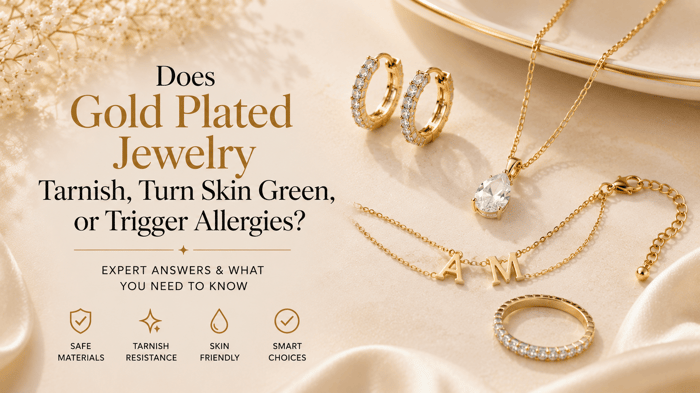
Gold plated jewelry gets a bad reputation that it doesn't always deserve. You've probably heard the concerns: it tarnishes quickly, it turns your skin green, it causes allergic reactions. Some of those concerns are valid. But a lot depends on one thing most people overlook: what's underneath the gold.
Gold-plated jewelry can tarnish, turn skin green, and trigger allergies, but whether it actually does depends entirely on the base metal and the quality of the plating. Cheap brass-based pieces behave very differently from gold plated sterling silver.
Today, we break down each concern clearly, so you know exactly what you're buying and what to expect from it.
What's the difference between gold plated and solid gold? Gold plated jewelry has a thin layer of gold applied over a base metal (usually sterling silver or brass). Solid gold, like 14K, is gold all the way through.
The gold content is the key difference: solid 14K gold is 58.3% pure gold, while gold plating is typically just 0.5 to 2.5 microns thick, roughly 1/100th the width of a human hair. Solid gold lasts indefinitely; gold plating wears down over time.
Does Gold Plated Jewelry Tarnish?
Yes, it can, but the gold layer itself is not the problem.
Pure gold does not tarnish. It's one of the most chemically stable metals, which is exactly why it's been used in jewelry for thousands of years. The issue is that gold plating is thin.
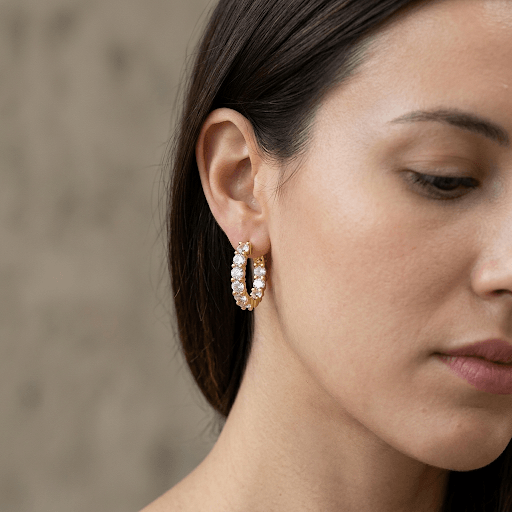
Over time, with daily wear, exposure to sweat, lotions, and moisture, the gold layer gradually wears down. Once it does, the base metal underneath is exposed to air and oxidation, and that's what tarnishes.
What speeds up tarnishing?
How quickly this happens depends on a few factors:
- Base metal: Brass and copper tarnish quickly. Sterling silver tarnishes more slowly and is far more stable.
- Plating thickness: Standard plating is 0.5 to 2.5 microns. Thicker plating takes longer to wear through.
- Your habits: Showering with jewelry on, applying perfume or lotion before putting it on, and swimming in chlorinated water all accelerate wear.
- Your skin chemistry: More acidic skin breaks down plating faster than neutral or alkaline skin.
Gold plated vs. solid gold: how long does each last?
Gold Plated | Solid 14K Gold | |
Lifespan | 1-3 years with care | Lifetime |
Tarnishing | Yes, as plating wears | No |
Re-plating possible? | Yes | N/A |
Best for | Trend pieces, occasional wear | Everyday fine jewelry |
The practical takeaway: gold plated jewelry is not a set-it-and-forget-it purchase the way solid gold is. With proper care, a quality piece can look great for years. Without it, the timeline shortens considerably.
Will Gold Plated Jewelry Turn Your Skin Green?
It might, but the gold is not the culprit. Green skin is caused by the base metal, not the gold coating on top.
When copper or brass is exposed to moisture, sweat, and the natural acids on your skin, it oxidizes. That oxidation creates copper salts (a compound called verdigris) that transfer to your skin and leave a greenish tint.
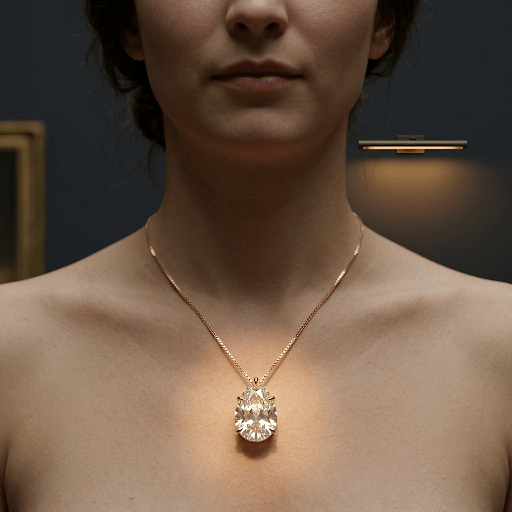
It's the same chemical process that turned the Statue of Liberty green over time.The green mark is completely harmless. It washes off with soap and water, causes no damage to your skin, and is not a sign of an allergic reaction.
Which base metals cause green skin (and which don't)
Base Metal | Turns Skin Green? | Notes |
Brass | Yes | Contains copper; oxidizes readily |
Copper | Yes | The most common cause of green staining |
925 Sterling Silver | Rarely | Much more stable; unlikely to cause discoloration |
Stainless Steel | No | Very stable base metal |
Gold plated over sterling silver (sometimes called gold vermeil) is significantly less likely to cause green skin, even as the plating wears, because sterling silver does not oxidize the same way brass or copper does.
If you've had green skin from jewelry before, the piece almost certainly had a brass or copper base. Switching to gold plated sterling silver typically solves the problem entirely.
Can Gold Plated Jewelry Trigger Allergies?
Yes, but it's rarely the gold causing the reaction.
According to the American Academy of Dermatology, nickel is the most common cause of contact dermatitis from jewelry, affecting approximately 10 to 20% of the population.
Nickel shows up frequently in brass alloys used as base metals in lower-quality gold plated pieces. As the gold plating thins and wears away, the nickel-containing base metal comes into direct contact with your skin, triggering a reaction.
How to tell the difference between oxidation and an allergy
These two things get confused constantly, but they present very differently:
- Oxidation (green skin): No itching, no redness, no irritation. The mark wipes off cleanly. Harmless.
- Allergic reaction: Redness, itching, a rash, or raised bumps at the contact point. This is your immune system responding to a metal it recognizes as a threat.
If you're experiencing the second set of symptoms, the base metal is the issue, not the gold.
What to look for if you have sensitive skin?
The base metal is everything. When shopping for gold plated jewelry, check the product description for these details:
- 925 sterling silver base: The safest and most skin-friendly option for gold plated pieces. Nickel-free by standard.
- Surgical stainless steel base: Also hypoallergenic and very durable.
- Brass or copper base: Avoid these if you have a nickel sensitivity or reactive skin.
If a brand doesn't clearly state the base metal, that's worth noting. Quality jewelry brands are transparent about materials because it's a selling point, not an afterthought.
How to Make Gold Plated Jewelry Last Longer?
The lifespan of gold plated jewelry is more in your control than most people realize. A few consistent habits make a meaningful difference:
- Put jewelry on last. Apply perfume, lotion, and hairspray before you put on your pieces. These products contain chemicals that break down plating.
- Take it off before water. Showers, swimming, and even hand-washing accelerate wear. Remove pieces beforehand when possible.
- Store pieces separately. Friction between jewelry causes scratching that thins the plating. Use individual pouches or a lined jewelry box.
- Clean gently. A soft cloth and mild soap are all you need. Avoid abrasive cleaners or ultrasonic machines.
- Keep it dry between wears. Moisture sitting on the surface speeds up oxidation. Pat pieces dry before storing.
None of these habits require significant effort, but skipping all of them consistently is what turns a two-year piece into a two-month one.
Is Gold Plated Jewelry Worth Buying?
It depends on what you're buying and who made it.
Gold plated jewelry over a brass base, with thin plating and no material transparency, is the version that earns the bad reputation. It tarnishes fast, can turn skin green, and may cause reactions in people with nickel sensitivities.
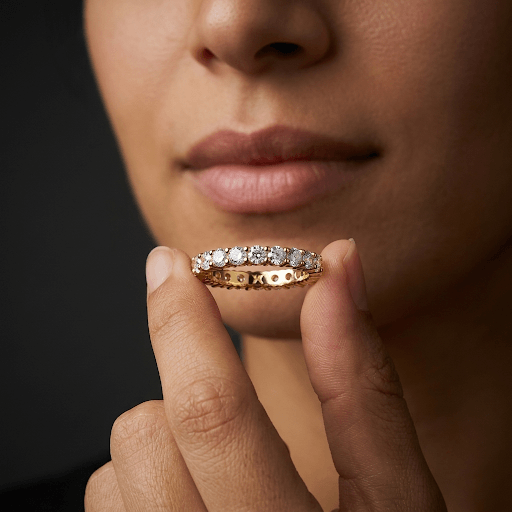
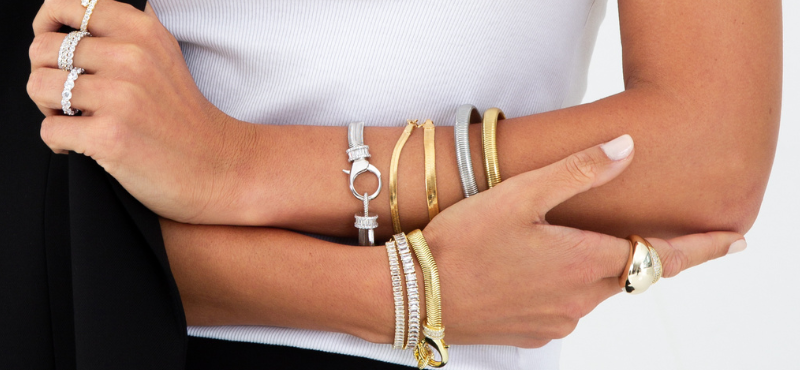
Gold plated jewelry over a 925 sterling silver base, with quality plating and proper care, is a genuinely good option. It gives you the look of fine jewelry at a fraction of the price, works well for trend-driven pieces you might rotate out of your collection, and is skin-safe for most people.
The material question to ask before buying any gold plated piece: What is the base metal?
If the answer is sterling silver, you're in good shape. If the brand can't or won't tell you, that's your answer too.
At Adina Eden, gold plated pieces are built on a sterling silver base, which means you get the stability and skin-friendliness of silver with the warmth of gold on top.
Browse the full jewelry collection to find pieces across every category, from earrings and necklaces to bracelets and rings. And if you want something that lasts a lifetime without any of the considerations above, the solid 14K gold collection is worth a look.